Inside The Tireless Lives Of Data Center Attorneys
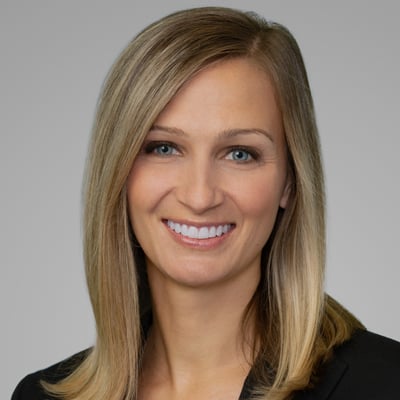
Melissa Kalka discussed with Law360 the life of a data center attorney and how she juggles and executes on multibillion-dollar transactions in the space.
Representing major players in the data center industry calls for a certain kind of lawyer: one who can work under significant pressure, handle public scrutiny and labor on until the sun rises.
Whether they're pulling an all-nighter reviewing deal documents line-by-line or standing on their feet in public hearings until early morning, one major thing data center attorneys across practice lines have in common is they are probably not getting enough sleep.
Mark Looney, a Virginia-based land-use partner at Cooley LLP, brings highly caffeinated soda with him when he has to represent data center companies in public hearings, where meetings can exceed 24 hours straight, with hours of public comment from flustered residents.
"Diet Mountain Dew is my go-to," Looney said.
Attorneys in land-use and transactional practices who have represented some of the biggest names in the data center space talked to Law360 Real Estate Authority about how they navigate the challenges of the job and get the work done.
A long perspective view of a modern data center featuring rows of glass-enclosed server racks with glowing blue lights flanking a central walkway with a gold-lit metal floor grate.
Looney's practice regularly sees him advocating for his clients' proposed rezonings at local government meetings. In doing that, he's also pitching the projects and espousing their benefits to elected officials and members of the public.
"I'm half lawyer, half marketing and sales person," Looney said. "A lot of what I do is effectively marketing and sales of whatever it is our client wants to do."
The types of clients Looney has worked with since starting his practice more than 20 years ago have varied over time, although in recent years, he has mostly represented data center developers and operators.
The first data center project he advised on was in 1999, when he helped a client land approvals to turn a 15,000-square-foot building that formerly contained a hardware store into a data center, the first of its kind in Fairfax County, Virginia.
Looney stressed the importance of being fully prepared when representing a data center client at public hearings in Northern Virginia and the larger Washington, D.C., area.
"I've been in meetings where I'm asked questions about stormwater management, and I provide an answer, and it turns out that there's a deputy administrator of the Environmental Protection Agency who's sitting in the audience, who happens to live in the neighborhood nearby where the project is," he said. "And they know 10,000 times more information about stormwater management than I do because it's what they do for their day job."
He attributes the ease he feels speaking in front of an audience to his experience as a child actor.
"I was on a television show on PBS. My mother was a drama teacher. I have been in front of audiences from the time I was five years old, standing on stage and acting," he said. "What I do is not acting, but you have to be able to be comfortable appearing in front of people, to be able to communicate to people well, and to try to break complicated things into less complicated explanations."
Maintaining composure is paramount in public hearings for data center projects, which, in Northern Virginia, have been a major source of controversy, Looney noted.
In 2024, he represented Compass Datacenters on rezoning proposals for the Prince William Digital Gateway, an estimated 1,760-acre data center project that's currently held up in litigation. One of the hearings for the project lasted 27 hours.
"For portions of the time, I would go outside and walk around," he recalled.
Looney worked on aspects of the application during the meeting to address certain modifications the elected officials asked for, and during breaks, he would walk around the compound where the building for the meeting was located and stretch his legs in the courtyard.
"In the early morning, I called home and told my daughter and son to have a nice day at school, because the hearing was still going on," he said.
Looney added that he tries not to take personally comments from residents who are expressing anger about a project, nor does he fight fire with fire. Using humor, even if it's self-deprecating, has helped simmer tension in the room, he said.
"I'm from a small town, and I will oftentimes say, 'Look, I'm from a small town, and you've got to speak slowly with me, because I'm not that quick on the uptake,'" Looney said.
He also tries not to minimize the concerns and anxieties he hears from residents over proposed data centers. "I also, frankly, try to validate some of what they say — not substantively — but to validate the fact that they are concerned," Looney said.
The work of representing a data center client looks quite different for a deals attorney.
Melissa Kalka, a Texas-based mergers and acquisitions and private equity partner at Kirkland & Ellis LLP, focuses a big chunk of her time on problem-solving, juggling contracts between transaction parties and ensuring the underlying agreements for multibillion-dollar data center deals lead to the best outcome for clients.
"I'm kind of tip-of-the-spear, the M&A team, as it relates to making sure all the pieces of the puzzle work together," Kalka said.
Her work on data center-related transactions has been extensive. Her team advised KKR and Global Infrastructure Partners on their roughly $15 billion purchase of CyrusOne, one of the world's largest data center operators. She and her colleagues also guided a group of private equity giants on a $40 billion deal to buy Aligned Data Centers.
One of the reasons she shines in her practice is that she thrives on chaos and stress, Kalka said.
"I actually put myself through law school during the recession, working full-time at a bank and going to school at night," she added. "And so, from the very beginning, I felt like my back was against the wall. It was my second career, and I was taking a gamble, taking on some law school debt and doing it."
She recalled being asked why she would make a good summer associate in one of her on-campus interviews during law school. She told the interviewer at the time, "There's nothing you can throw at me that I can't figure out how to balance and how to juggle."
She spends time off the clock keeping herself informed on the major going-ons in the data center market. She listens to podcasts about artificial intelligence during her morning runs and reads articles about the industry on weekends.
"It's something that you have to view as a part of your job. Because if I'm not keeping up with the market, what people are talking about and the concerns that are going on, I'm doing a disservice to my client," she said. "Which is why I think you've got to love what you do to do this, because otherwise it kind of sounds terrible."
Kalka goes on runs to relieve stress, noting that she ran a half-marathon every year while in law school.
"Right now, I'm training for a half-marathon with one of my clients," she said.
Sam Rudik, a real estate partner at Simpson Thacher & Bartlett LLP whose practice focuses on data centers, said the amount of hours he spends each day on a deal can grow particularly long as the closing date approaches.
"Sometimes it's 24 hours, particularly as you get closer to a milestone," Rudik said, on the length of turnaround times for transactions. "If the deal is ready to be signed and everybody wants to sign tomorrow, it's kind of drop everything else you're doing and focus on this to get it done."
Rudik recently represented Blackstone on a $16 billion financing for a Michigan data center campus — and he and his colleagues have advised the private equity giant on other digital infrastructure-related deals and projects over the last several years.
Clients expect high levels of service from Simpson Thacher, and so an important aspect of his work as an attorney is being proactive about what a client needs, he said. "You're not being passive and reactive. You're actively pushing things forward for the client."
In the data center space, even more work can pile up after a transaction closes, he added.
"They're complicated assets," Rudik said. "If they're under development, and there's a large construction project that's ongoing, it's very dynamic. It's not a 'set it and forget it.'"
Data center customers may request changes to a facility's specifications as it's being built, which can necessitate renegotiations between deal parties, he noted.
"I'm constantly having a dialogue with our clients about things that are going on at data centers after we close," he said. "Which is not necessarily the case with other asset classes."
When it comes to making time for himself outside his legal profession, he said he has to be "intentional and purposeful."
"This job, particularly when things are very busy, it's easy to just always be on and always be checking and responding to emails," Rudik said. "So I try to be thoughtful and say, if I'm doing bedtime with my kids, I'm going away, and I'm just not reachable for however long it may be."
Even after 25 years of practicing as a land-use attorney and attending public hearings for clients, stresses of the job still follow Looney home after work.
"I'm not a good sleeper. I wake up at three o'clock in the morning, and my mind starts racing about, 'What could I have done differently? How am I going to tackle this upcoming meeting?'" Looney said. "I'm not afraid to walk into the room, but the after-effects of it linger for a while."
He usually needs to spend an hour or two after a lengthy public hearing unwinding at home, channel surfing or eating a late dinner, to allow his brain to decompress, he added.
Kalka said she has trained her body to function at a high level with a minimal amount of sleep. Being able to work long nights has helped her succeed in her practice, although she stressed that she still needs to rest now and then.
What is the first thing she does when she finishes a deal?
"Sleep," she said, laughing. "Take a very long nap."