Oh, Canada? How Dow Turned to American Litigators at Kirkland to Lead a Critical Piece of Litigation in Canada
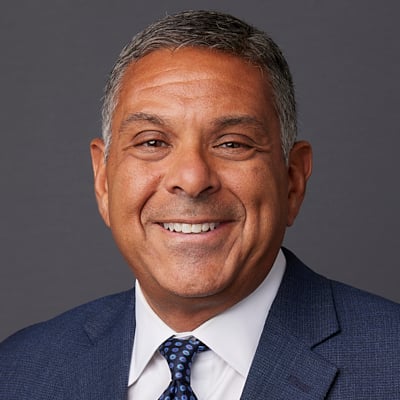
Nader Boulos and Benjamin Kurtz were quoted in The Am Law Litigation Daily on Kirkland’s lead role in a decades-long dispute in Canadian court resulting in a multibillion dollar win for Dow.
Michael Glackin, the deputy general counsel of Dow, used car-racing terms to explain the company’s decision to bring on Kirkland & Ellis more than a decade-and-a-half ago to take the lead on the company’s dispute with NOVA Chemicals over an ethylene plant in Alberta, Canada, jointly owned by the two companies.
“If I’m told that the future of the company is dependent upon winning an F1 race, I’m going to buy Team Red Bull and Team McLaren, and Max Verstappen is my driver.”
“It’s hard to argue with the results,” he added.
Those results? NOVA paid 1.6 billion Canadian dollars (about $1.2 billion) to two Dow subsidiaries earlier this month after the Alberta Court of Appeal declined to stay the latest trial court judgment in the two-decade-long dispute over the plant, known as E3. Dow’s total recoveries from NOVA in the litigation now sit at CA$3.56 billion (about $2.6 billion) along with fees and costs of CA$140 million (about $100 million) since Kirkland signed onto the case and formed a joint team with Canadian colleagues at Bennett Jones and Blake, Cassels & Graydon.
Although I can’t argue with the results, I did quibble a bit with Glackin’s F1 metaphor. I spoke with him and Kirkland partners Nader Boulos and Benjamin Kurtz last week about Dow’s decision to bring on a U.S. law firm to lead the case north of the border. Although the Kirkland lawyers led the way in mastering the facts and law governing the joint venture, drafting briefs and devising case strategy, they couldn’t sit in the metaphorical driver seat inside the Canadian courtroom. Local rules prevented them from crossing the bar to make arguments in court or deposing NOVA witnesses.
Whatever the limits of his metaphor, Glackin said his first move when he got involved in the case was to bring in Kirkland & Ellis to take a lead, coordinating role.
“When you have international litigation that is high stakes, high risk, high complexity, which is of substantial meaning to the business and the financial performance of the company, we want to win,” said Glackin of Dow’s approach. “And we want to win and prove it with our proven team [with] a proven track record.”
Glackin said that over his 25-year career at Dow, Kirkland has been a key partner.
“The first move I made was to bring Kirkland on board and make sure we had the right Kirkland team.”
“I wanted to make sure that Kirkland wasn’t just in the backdrop,” Glackin said. “Kirkland was in the forefront of the fight.”
What that meant in practice, Boulos said, was strategy: developing the architecture of the case, mastering the law and evidence, shaping themes and coordinating across firms and borders.
“Some of the most important work, if not the most important work, is what you do long before you’re ever in front of a jury or a judge,” Boulos said. “We handle litigation where we have either big teams here within Kirkland or big teams across law firms all the time. So, the concept of working with other law firms—dividing responsibility, the premium on communication and making sure everybody has the same vision and we're all executing on that plan—is something we are used to.”
Kurtz, who started on the matter as a second-year associate and has since made partner, described Kirkland’s early work on the case as foundational to the ultimate results.
“What we realized quickly was how much work there was to do in all the areas where there really is no limitation on our ability to operate,” Kurtz said. That included unpacking NOVA’s conduct under a complex web of contracts and digging through millions of pages of documents. It also meant distilling a highly technical dispute into a coherent story that judges could understand.
Dow’s Glackin boiled this value down to “the art of persuasion.” He said it’s an area where Kirkland and other U.S. litigation firms have more experience than litigators in other venues.
The Big Deal
While the money at stake in the judgments is eye-catching, Glackin said what’s more important is what comes next at E3. The fight was ultimately over control, transparency and the future operation of one of the Dow’s most important assets under contracts that will govern the joint venture through 2077.
E3, located in Joffre, Alberta, sits on land owned by NOVA, which also operates the facility and two other ethylene crackers located there. Dow and NOVA are co-owners of E3, but NOVA controls day-to-day operations—giving it, as Dow would later argue in the litigation, significant advantages.
Glackin described ethylene as the lifeblood of Dow’s polyethylene business. Alberta offers what he called the “ethane advantage”—a pricing structure that gives it the world’s most commercially profitable ethane. That ethane is converted into ethylene, which then feeds Dow’s downstream plastics and derivatives businesses.
“It’s one of the most important flagships in our fleet,” Glackin said. “It’s of critical importance, and it’s our most prized asset in Canada.”
By the time Kirkland became involved, the dispute had already been simmering for years. Dow believed it was being wronged “to the tune of big dollars,” Boulos said. But the full extent of the alleged misconduct was not clear, in part because Dow lacked access to information controlled by NOVA.
One of the biggest challenges, Kurtz said, was simply gaining access to that information. NOVA, as the site operator, had personnel on the ground and full visibility into plant operations. Dow did not. He said this information gap was one area where Kirkland benefited from U.S. litigation instincts.
“As U.S. litigators, that’s something we’re very accustomed to doing—pushing for discovery,” Kurtz said.
But Kirkland’s lawyers, as U.S. counsel, could not take depositions or make oral arguments in the Canadian courts. Those roles fell to the Canadian firms, Bennett Jones and Blakes.
“This was a case where a lot of great lawyers were involved,” Boulos said. “And a lot of work had to be done to make sure everybody was rowing in the same direction.”
It was also a case from Dow’s perspective, where the interpretation of the joint venture moving forward through 2077 is even more valuable than its claims about how the operation has been run in past decades.
“This was as much a fight about the future as it was about past damages,” Boulos said. “Which seems crazy to say in a case where the company has recovered billions of dollars.”
“While everyone likes to focus on the dollar figures associated with damages,” Glackin said, “the most important part of the case is how [E3] will be operated now through 2077.”