In the News The Am Law Litigation Daily

Litigators of the Week: After 6-Week, 3-Plaintiff Trial in Second Calif. Talc Bellwether, a Defense Verdict for J&J

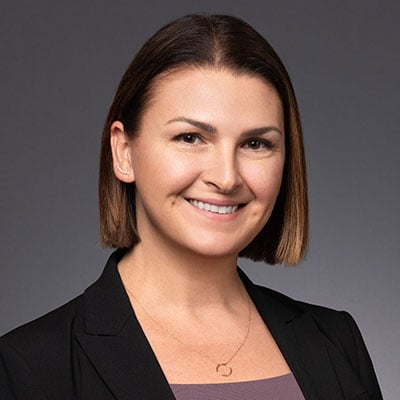
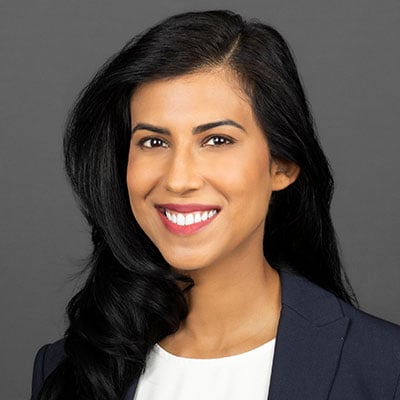
Shaila Diwan and Julia Romano participated in a Q&A as part of The American Lawyer Litigation Daily’s “Litigator of the Week” feature. Kirkland was recognized for its recent win for Johnson & Johnson in its second bellwether trial in litigation alleging Johnson & Johnson’s baby powder causes ovarian cancer. Chris Cowan was also highlighted.
In December, in the first bellwether trial in California state court cases alleging Johnson & Johnson’s baby powder causes ovarian cancer, the company was hit with a $40 million verdict.

Last week, in the second bellwether trial, the company secured a defense verdict in cases brought on behalf of the families of three women who died of ovarian cancer. A Los Angeles jury sided with the company 10-2, delivering a defense verdict for Johnson & Johnson on the question of negligence, meaning they didn’t proceed to the issue of causation.

Our Litigators of the Week are Shaila Diwan and Julia Romano of Kirkland & Ellis, who took the lead for J&J in the second bellwether.

Litigation Daily: What was at stake here for J&J?

Shaila Diwan: This was the second trial in the California coordinated proceeding (JCCP) bellwether process, and it was incredibly important to us and Johnson & Johnson to secure a complete defense verdict. More broadly, there are thousands of talc cases pending across the country, with a number set for trial in 2026. We and the company are vigorously and successfully defending against the baseless claims being made that talc causes cancer—and in the past three weeks alone, we have won two out of three trials. Each new trial prepares us to take on the next.

How did this matter come to you and the firm? And how did you, in particular, get tapped to try these cases?

Diwan: Our incredible team at Kirkland has served as national coordinating counsel for Johnson & Johnson in the talc litigation for many years, handling all aspects of the litigation soup to nuts. Julia and I have both been involved in various aspects of the litigation from the very beginning, so we have been lucky enough to train under some of the best lawyers in the country and gain recognition and support within our team, the firm and with in-house counsel at Johnson & Johnson. I’ve personally been trying cases for Johnson & Johnson for many years, including as lead trial counsel in the last talc/ovarian cancer trial to verdict right before this one–Emerson v. Johnson & Johnson in the Philadelphia Court of Common Pleas, where we secured a favorable outcome ($250,000 verdict, the result of jury compromise following lengthy deliberations). Johnson & Johnson’s in-house team has been so supportive on so many levels in my career; I always look forward to working with them and was eager to take this bellwether trial on when the client reached out.

Julia has represented Johnson & Johnson in the talc litigation for more than 10 years, managing both the California mesothelioma docket and serving as lead defense counsel for the California ovarian cancer JCCP. She has also second-chaired multiple talc trials, so she was a very natural choice to team up with for this second bellwether trial. 

On a personal level, Julia and I have worked with each other in this litigation since we were associates. We both do a lot of jury trials but have never tried one to verdict together. It felt like a full circle moment for both of us to achieve a great outcome, for a great client, with a great friend.

Who was on your team and how did you divide the work?

Julia Romano: There were roughly 30 live witnesses given the consolidation and four plaintiffs’ lawyers (from three different firms) in front of the jury splitting openings, witnesses and closings. Given that context, Shaila was at the helm leading our team, but we decided to split up as much as we could between the two of us and our partner, Chris Cowan, so we could each really focus on our witnesses and the jury could get a feel for each of our personalities. Behind the scenes, we were supported by an amazing team of attorneys, paralegals and staff here at Kirkland, and by in-house counsel at Johnson & Johnson who are not only incredibly strategic, but also very supportive of their trial counsel, win, lose or draw. That makes this win all the more special for us and our team.

This result followed a $40 million verdict for the plaintiff in the first bellwether in these JCCP proceedings. What did you and your team pick up from that earlier trial that was useful the second time around?

Romano: The first bellwether trial was also hard-fought and complex–it was a two-case consolidated trial. Having worked up the bellwether cases and served as local counsel in that trial, I had a good understanding of the court’s evidentiary rulings and their impact on Johnson & Johnson’s defenses. This allowed us to pivot where we could in the second trial. We also had a better idea of plaintiffs’ themes in the context of consolidation and allowed us to evaluate what defense themes were the strongest in that context.

What were your key trial themes and how did you drive them home with jurors?

Diwan: Many of our key themes on the strength of the science and company conduct remained the same—Johnson & Johnson has always tested and exceeded industry standards to ensure the safety of its products. The scientific and medical evidence overwhelmingly demonstrates that talcum powder use does not cause cancer and all major U.S. public health authorities agree on that point.

Our case-specific themes focused on challenging the credibility of plaintiffs’ theories and experts—calling out inconsistencies in their theories (for example, plaintiffs claimed talc and asbestos never the leave body, yet no asbestos and barely any talc was found in these women’s tissues) and emphasizing that what plaintiffs’ experts were saying inside the courtroom did not match their actions and statements outside the courtroom. We drove these themes home through repetition across several witnesses and graphically, through a series of comparison images of out-of-court “truths” versus in-court “evidence” brought by plaintiffs’ experts. For example, we showed the jury images of real bodies versus the doctored models and diagrams used by plaintiffs’ experts. We also presented plaintiffs’ experts’ social media posts relaying that most cancers are naturally occurring and not due to product use, versus the experts’ in-court statements to the contrary.

Another theme we hammered home was that plaintiffs’ experts never raised any sort of alarm about talc use allegedly causing ovarian cancer outside of court (even to this day). Our partner Chris Cowan crossed one of plaintiff’s medical experts on the fact that even though she claims a high number of ovarian cancers are attributable to talc use, she does not recommend risk-reducing surgery to women with a history of talc use. Chris got the expert to admit she considered taking such action as speculative and not based on sufficient data. We saw two jurors’ jaws drop. From that point forward, we built this theme with each and every expert, showing how risk-reduction surgery (preemptive removal of fallopian tubes and/or ovaries) is a well-accepted and recommended procedure to lower a woman’s risk of ovarian cancer. Yet, plaintiffs’ experts were not recommending risk-reduction surgery for women who used talc and not a single medical institution or gynecologic professional society recommends such surgery for women with a history of talc use.

You leaned heavily on the contrast between what plaintiffs’ experts were saying in court versus their real-world practices. When did that theme crystallize as a pillar of your defense?

Romano: We began developing the theme during expert discovery, but we had no idea which cases would be chosen for the bellwether trials. There were also a number of different experts across the cases, so we could not predict the strength of the theme at the time. After the consolidation of these three cases, we dug in and found really strong cross-examination points for each of the four expert gynecologic oncologists—many of these issues were new and we had no prior testimony, so we just went for it on cross-examination without any control. After those crosses landed and we saw the jury reactions to issues like risk-reducing surgery, we started putting together closing slides building on that theme across all of the remaining experts.

Did the consolidation of three plaintiffs into a single trial make your job harder in terms of jury messaging—or did it create opportunities for the defense?

Romano: Consolidation absolutely made our job—and the jury’s job—significantly harder. We strenuously opposed consolidation because it is so prejudicial for defendants and confusing for the jury. The court originally scheduled three bellwether trials, each with two cases consolidated for trial. We moved for summary judgment in one of the cases set for the third trial on statute of limitations grounds. When the court granted summary judgment in our favor in that case, she unilaterally decided to add the remaining case to the second bellwether trial and further extend the length of the trial. This was two weeks before trial, so we had to really scramble to prepare for not just a two-case, but a three-case consolidated trial.

The fact that the trial was further lengthened and plaintiffs put on a lot of cumulative evidence (over our objection) was not lost on the jury. Based on jury feedback, it seems to have helped us, because it highlighted to the jury the weaknesses in plaintiffs’ experts, versus our streamlined case with concise expert testimony.

Your closing repeatedly emphasized that plaintiffs carry the burden of proof. How important was it for you to keep the jury focused on what plaintiffs couldn’t prove, as opposed to laying out your own theories about what could have caused these women to develop ovarian cancer?

Diwan: Both were important. It’s always important for the jury to understand plaintiffs have the burden of proof. Here, it was even more important for two reasons. First, plaintiffs were proceeding on two negligence per se theories which made it sound like Johnson & Johnson had the burden, even though we didn’t. To compound the issue, plaintiffs brought a former FDA commissioner as an expert witness, who further confused the standard. We were crisp in identifying key evidence to the jury, including prior FDA decisions establishing the safety of the product and the fact that FDA does not require a warning. Focusing on this, along with our strong company conduct and testing evidence, certainly played a big role in winning on the first question—negligence.

Second, plaintiffs argued we were obligated to produce some “alternative” cause. Again, not our burden. But we put on a defense based on the general consensus of the medical community and U.S. public health authorities—that ovarian cancer isn’t caused by talc and that it’s a naturally occurring cancer. We strengthened that further by demonstrating on cross-examination that outside of court plaintiffs’ specific causation experts agreed with us.

What comes next here? And what’s the biggest lesson you’re taking from this trial into the next wave of bellwethers?

Romano: There are a number of talc trials set across the country throughout the remainder of 2026. In terms of what comes next for the California coordinated proceeding, we have a hearing on July 16 to discuss the second bellwether wave selection process and timeline for working up those cases prior to trial.

As for lessons learned, in this last trial we had to combat the court’s interpretation of a relatively new provision to the California Evidence Code—section 801.1—which effectively raises the standard for defense expert medical causation opinions. There is no published case law yet applying this new code section, and even the court appeared to struggle with how to apply 801.1 to the evidence in a case about cancer and risk factors. Ultimately, the court took a narrow view and severely limited what our experts could testify to on “alternative cause.” Plaintiffs capitalized on this ruling and argued to the jury that our experts agreed with theirs (which was false, we were just prevented from putting on our evidence). While we respectfully disagree with the court’s rulings and interpretation of the law, it will certainly inform our strategy going into the next wave of bellwethers.

What will you remember most about this trial?

Diwan: The court clerk reading the verdict in open court and winning on the very first question–“Question 1: Was Johnson & Johnson negligent? Answer: No”–is definitely one for the books. Not only is it the only right answer, we’re glad it came so quickly in the face of a long trial and a multi-part verdict form.

Romano: I agree with Shaila! And of course, getting to try the case together. This was a long and incredibly hard trial, with the odds stacked against us, but we had the full support of Kirkland and Johnson & Johnson and are absolutely thrilled we were able to bring home this win.