Absolute Credit Series: It Takes Three to Tango: Reinsurance Transactions in the Modern Investment Landscape
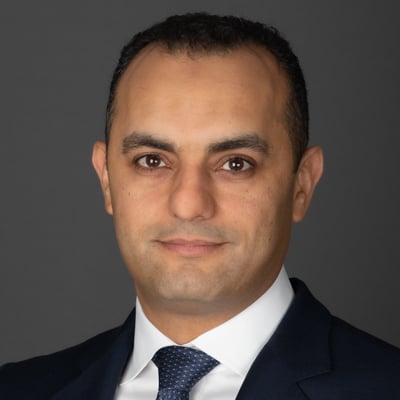
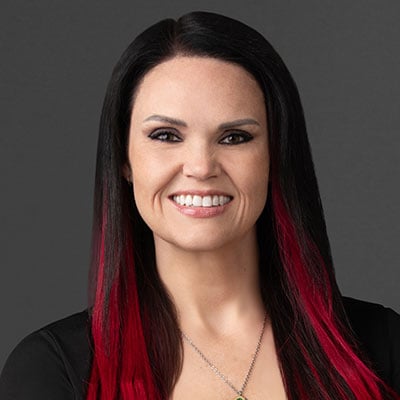
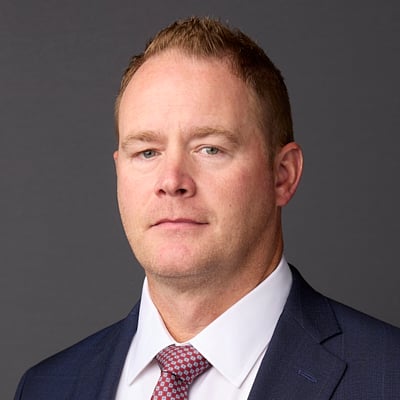
In this episode of the Absolute Credit series, Kirkland partners Lindsay Trapp, Rajab Abbassi and Jeremy Watson unpack the modern reinsurance market and the increasing integration of insurance and asset management. The conversation breaks down how insurers use reinsurance to transfer risk and manage liabilities, the mechanics of collateral and trust structures, and the role asset managers play in supporting insurance obligations. The episode also highlights considerations associated with reinsurance arrangements involving private fund interests, rated funds and other alternative investment assets.
LINDSAY TRAPP (00:00):
Good afternoon and welcome to the latest episode of Absolute Credit. I'm Lindsay Trapp. I'm a partner in Kirkland's New York office but today joining you from lovely Chicago with my two partners from our insurance transactions team, Jeremy Watson and Rajab Abbassi. Hi guys. Welcome.
JEREMY WATSON (00:17):
Exciting to be here.
RAJAB ABBASSI (00:18):
Yeah. Thrilled. Let's do this.
LT (00:20):
So we all work a lot together. It's been one of the funnest parts about joining is getting to learn all different things about the way that insurance companies go through transactions and different things outside of my world of investments for them. So I thought it'd be great to talk with you guys a little bit about some of the history of insurance transaction, the ways that insurance companies are moving through the world these days with asset management and then maybe touch on something that we're seeing quite a lot of, which would be reinsurance. So let's talk a little bit about history. How did we come to where we are these days in insurance?
RA (00:57):
I think if we go back to pre-global financial crisis, the mid-aughts. Historically, if you think about an insurance company at that time and before then, an insurance company was a business that was housed under one roof and it did four main things, there’s some other stuff, but four main things. One is it underwrites risk, meaning a payout based on the occurrence of some contingent or fortuitous event. Sometimes that contingent event is certain like the passage of time or death. So one, it underwrites risk. Two, it brings in premium and invests those dollars in investment assets. So there's an asset management arm of that insurance company. Three is it distributes product and four is it administers the book of business that it has and its balance sheet. And since that time, there's been a trend towards disaggregation of all four of those things. The most salient of which for our discussion are the first two, underwriting risk and managing the assets.
(02:02):
It might be helpful actually to talk about a particular product and that may lead to a discussion of reinsurance. So let's say Jeremy and I wanted to start an insurance company, and we call it Kirkland Insurance Company Inc, or Kirkland Life Insurance Company of Illinois. And we go out and we want to sell products. So we come to you, Lindsay, and we say, we want to sell you a life insurance product or an annuity. Let's keep it really simple. We’re going to sell you an annuity. And that annuity is going to be the simplest product out there, a multiyear guaranteed annuity. It's like a big CD. So that guaranteed annuity will have some basic terms in it. One is how long the insurance company will keep your premium dollars, and two is the crediting rate that it will provide you on that policy. So let’s say it’s a five-year MYGA that pays you a crediting rate of 5% a year.
(03:01):
You've basically just as a retail customer lent Kirkland Insurance Company of Illinois, Life Insurance Company of Illinois, let’s say $500,000, that’s how much you wanted to invest at a 5% interest rate for five years. I'm now under in that risk. And if you try to take your money out early, there might be a surrender charge to it or other terms, but you know that at the end of that five years, you will get your $500,000 back plus your 5%. That product is now on my balance sheet. Jeremy and I’s balance sheet as Kirkland Life Insurance Company of Illinois. We owe you that money in five years plus we owe you 5%. Our job, one of the ways that we would make money is to take your $500,000 and invest it in mostly fixed income but some other asset classes that will generate a yield in excess of that 5% and create a spread.
(04:01):
And that’s kind of the core way of those first two prongs. Before the global financial crisis, there were a bunch of insurance companies that wrote business in an economic environment where interest rates were a lot higher than they were post-financial crisis where we had a persistently low-interest rate environment. And so post say 2009, you got to a place where those insurance companies and their balance sheets where they wrote a bunch of business with those terms simply did not have the capabilities to generate the yield that would represent a spread over that crediting rate that we just promised to provide you. And so you had a fertile environment for asset managers who are the best in the world at what they do, which is originating assets, making loans and deploying capital who could help solve that problem. And you had receptive insurance companies who weren’t in as strong a financial position as they were in before the global financial crisis and receptive regulators who wanted to solve a global problem that resulted from the global financial crisis. So you really had fertile ground for this convergence that we’ve seen since then.
LT (05:16):
So in walking through kind of some how these sort of different pieces broke apart or maybe are coming back together in different ways. So now we've got a lot of insurers who are either owned by or they themselves own asset managers. So is that kind of continuing this trend of making sure that we are from a regulatory perspective and all those types of things building all of the capital that’s going to be necessary to uphold these policies and these risks that have been underwritten as well?
JW (05:50):
Well, so I think to continue the timeline of what Rajab was talking about, how we’ve ended up where we are with asset managers owning insurance companies or having affiliations with insurance companies. Part of the solve in the timeline that Rajab was talking about is asset managers come in, and they assume liabilities from the companies that wrote the, from Kirkland Life Insurance company in Illinois.
RA (06:23):
We just made it up.
JW (06:24):
Yeah. The reinsurer assumes the risk on that annuity and as part of that reinsurance transaction, the reinsurer manages the assets that are supporting the risk that the reinsurer assumed. And the way that the asset managers got into the game is forming or buying reinsurance companies. I don’t know if you want to talk about like “what is reinsurance?” if you want to like get into that.
LT (06:52):
Oh, I do. I’ve seen words on paper with things that you and I have done together and I was like, huh, I'm not even sure I know how to say that word. So yeah, let’s run through firstly, who are the parties to a reinsurance transaction?
JW (07:10):
So reinsurance 101, reinsurance is at its core, it’s insurance of insurance risk. The parties to a reinsurance transaction ceding company is Kirkland Life Insurance Company of Illinois. Reinsurer is …
RA (07:29):
Ellis Re.
LT (07:30):
There you go
JW (07:31):
Ellis Re.
LT (7:32):
I like it.
JW (7:33):
And it’s an indemnity transaction. The reinsurer agrees to indemnify the ceding company for whatever the risk under the business that’s being reinsured is. And reinsurer doesn’t have privity with the policy holder. The ceding company continues to be directly responsible to the policy holder. Reinsurer agrees to make payments to the ceding company whenever the risks under the reinsured business mature. Some additional words on the page that get confusing to some: Reinsurance of reinsurance risk is a retrocession, and the retrocessionaire is the entity that is assuming the reinsurance risk from the reinsurer. Block versus flow transactions, just more terminology to understand. A flow reinsurance transaction: Reinsurer is assuming business that is written on an ongoing basis, future business that’s written on an ongoing basis. As new business is written, premium or a portion of the premium is sent to the reinsurer and reinsurer agrees to be responsible for some share of new policies that are written.
(08:52):
Block transaction is reinsurance of a book of business that’s already been written. So if Kirkland Life Insurance Company of Illinois, I have to think every time I say it, wrote a billion dollars of business in 2020 through 2024 and wants to get out of the business because they don’t like it, they don’t have an asset manager that can manage the assets, reinsure that entire block, that’s a block deal to send the entire book of business to the reinsurer in exchange for or together with assets backing all the liabilities that were written.
LT (09:34):
Okay. So that’s where the key part I think comes in and where our worlds have crossed a little bit. Let’s talk a little bit about like the anatomy of a transaction. So I know we kind of have these SPVs or trusts that assets suddenly wind up in, and I get to see a lot of these sort of things that are resulting in trusts. So how does the overall, I guess, structure itself look?
JW (10:00):
In a reinsurance transaction, reinsurer’s typically going to put up collateral for the liabilities that it is responsible for to the ceding company. That collateral could take various forms. You’ll hear modified co-insurance, modco, or funds withheld. Those types of transactions, the assets actually remain on the ceding company’s balance sheet, a different form of collateral, which I think we’ll identify. We’ll talk about the issue that you’ve mentioned before. Reinsurer takes the assets on its balance sheet, puts them into a trust — a trust account that is with a third party trustee. Reinsurer or reinsurer's asset manager manages the assets and the ceding company has access to those assets, access to the assets in the trust, if the reinsurer fails to pay claims that are due under the reinsurance transaction.
RA (11:01):
In our example, Kirkland Life Insurance Company of Illinois, let's assume that it had made $10 billion worth of promises like the promise that we talked about earlier where they sold you a MYGA, a multiyear guaranteed annuity. And they have $10 billion worth of liabilities out there where they know that that's going to come due. As Jeremy said, Kirkland Insurance Company, Life Insurance Company of Illinois still has that obligation to the policyholder. That never goes away. Contractually, they are still on the hook to the policyholder, and they have a balance sheet that they have to manage. So one of the main things with reinsurance is one, providing Ellis Re, in our example, needs to provide Kirkland Insurance Company of Illinois. The first thing, it has to provide credit on its balance sheet for that indemnity contract, which is what we call a reinsurance agreement, which is just basically a big contract that says Ellis Re says, “I’m responsible for those liabilities. When and if they come due, I will make payments to you, Kirkland Life Insurance Company of Illinois, so you can pay them to the policyholder.” Technically they’re actually most of the time also administering the blocks that they’re making the payment, but from a legal perspective, they’re paying it on behalf of the underlying insurer. So there are two main ways to provide credit for reinsurance. One is for Ellis Re to have status with the relevant regulator and that could take all sorts of forms. Probably don’t need to get into that for this particular audience, but if they’re licensed or they have particular status with that regulator, they can either provide that credit automatically because the regulator says, “I know Ellis Re. I trust Ellis Re. I regulate Ellis Re, therefore I trust that this relationship can convey that credit so that on the balance sheet of the ceding company of Kirkland Life Insurance Company of Illinois, it can book that liability as having been transferred to Ellis Re and book a receivable.
(12:58):
The second way is if you don’t have that status is to collateralize the obligation. And that’s where I think a lot of what you’re referencing comes up. Two ways to collateralize that obligation involve the assets staying on the balance sheet of Kirkland Life Insurance Company of Illinois. So if Jeremy’s Ellis Re and I’m Kirkland Life Insurance Company of Illinois, I’ll put his assets in a box and I’ll tell him, you can manage those assets. You can even appoint someone, an affiliate or some third party to manage those assets. But I want to have access to them whenever I need to, because if you ever fail in your obligation, well, I’m already holding those assets on my balance sheet. I can go grab them, sell them, get liquidity, and pay my obligations when they come due. And that’s what he was talking about with funds withheld or ModCo. Another way to do it is to put those assets in a trust. Now, a trust for this purpose is generally a pretty stringent trust.
(14:03):
There are some rules around it that make it a less favored option a lot of times. Assets have to be managed a particular way. There are more restrictions on what you could do with those assets, and they have to be valued in accordance with their fair market value, which creates some volatility and uncertainty with the way that the assets are managed. So that’s a less favored option, but it is available, a credit for reinsurance trust. Even in a scenario where I do not have to collateralize the obligation to convey credit for reinsurance, well, in our example, let’s say Ellis Re is fully licensed by the same regulator that I am regulated by.
(14:44):
So Ellis Re can convey reinsurance credit just by signing the reinsurance agreement. I might say, “Well, I have $10 billion worth of liabilities owed to my policyholders. I need comfort that there are assets there that are securing your obligations as the reinsurer/indemnitor in our agreement. And so I want you to put them in a comfort trust. Those are less restrictive than the credit for reinsurance trust that we talked about, but I need to make sure that if anything ever goes wrong, there’s some insolvency event, there’s a capital crunch or something goes on in the world and I need to go make sure that Ellis Re is going to comply with its obligations. I need the ability to go have the trustee grab those assets and send them to me so that I can pay the policyholders. And that’s where some of the friction comes in, I think.
JW (15:40):
And part of the ability to grab the assets is to ensure that whatever documentation is necessary to transfer the asset, whatever consents are necessary to transfer the asset, are provided to the trustee upfront so that when … which one of us is the ceding company? You’re the ceding company.
RA (16:02):
I’m the guy on the hook.
JW (16:04):
So when ceding company calls reinsurer to collect a settlement payment, reinsurer doesn’t pay, ceding company needs to be able to go to the trustee and say, Rajab owes me a million dollars, he hasn’t paid, send me a million dollars. If the trustee can’t actually liquidate the assets in the trust, then the trust isn’t serving the purpose that the parties intended it to serve, which leads to I think an issue that I know you want to talk about.
LT (16:40):
Yeah. And I think actually what we’ve just discussed is quite helpful. So we are definitely seeing a number of notes and sometimes residual pieces in rated funds and CFOs being the subject of a reinsurance arrangement. And so we get requested to review essentially the upfront consents because they are being pledged — in our world, we would call them pledged for whatever this reinsurance transaction might be. The upfront transaction is fairly straightforward. We are consenting to pledge to whatever the box might be, the trust, whatever, whichever version of this that comes up to. I think where the bigger issue comes is that follow-on down the line because rated funds and CFOs are 3C7 private fund structures. So they are required to comply with certain provisions to retain their exemptions from the ‘33 Act and the Investment Company Act by ensuring that all investors are accredited investors, qualified purchasers.
(17:50):
And then there are a multitude of other things that go along with it. KYC tax impacts if you had, for instance, someone who ultimately ended up holding a fund interest who is a non-U.S. person coming into a U.S. structure, could that cause issues? So I guess it’s how free does that have to be, right? Because I think some people have different views on what that should be from the insurance side, but there is a very kind of clear point I think for our manager clients that we need to maintain exemptions from the Investment Company Act and dealing with the 33 act securities offers on private placement. So how free do these often look?
RA (18:47):
First of all, you’re right. People have different appetites for, especially the person who is in the ceding company’s shoes might have different appetites depending on the block, their view of things generally how conservative or not conservative they are as an organization. And there is a difference between the portion of the corpus of the trust or the collateral account that is backing the liability up to a hundred percent of that liability amount and what we call over collateralization, because a lot of these collateral structures include assets in excess of the actual liability amount on an actuarial basis. And there may be if that particular asset is being used for over collateralization as opposed to assets supporting the actual insurance reserves, there’s a little bit more flexibility. But if you’re talking about a trust and this is a fundamental part of the assets in the trust where the ceding company is really focused on being able to draw those assets to pay those liabilities, there could be circumstances in which the ceding company, if it’s being used for that particular purpose, where the ceding company will feel more strongly about the need for it to be freely transferable.
LT (20:15):
Yeah. And I think that will be just an inherent conflict with kind of the overarching funds and private placement regimes and clearly not saying that they can’t sell it, but it would have to be to someone who meets those eligibility requirements essentially. So that’s where I think we see some different views coming in, but it is certainly something that for managers that are looking to do this, or if you are an investor coming into a rated fund looking to reinsure those positions, these are kind of the two sides to the coin and it does require a good bit of consideration in order to be able to engage in those.
JW (20:57):
As the manager of the asset that is being asked to provide a consent upfront, you are consenting to a known receiver of the asset. You know that the consent that you’re signing is if things go bad and the asset needs to be moved out of the trust off of the reinsurer’s balance sheet, it’s going to Kirkland Life Insurance Company of Illinois.
LT (21:30):
We got to get something made, put that on it.
JW (21:32):
Now. We do.
LT (21:32):
It’s going to be... Yeah.
JW (21:35):
That’ll be for the 201 and 301 episodes.
RA (21:39):
It’s KLICI. Kirkland Life Insurance Company of Illinois, KLICI.
JW (21:44):
There you go.
LT (21:47):
See? Exactly. It’s going to be perfect.
RA (21:48):
We’ve got KLICI and Ellis Re. Let’s just use those.
LT (21:50):
I love it.
JW (21:53):
End of the day, you know who you’re consenting to actually receive the asset. The hard thing is depending on the type of risk we’re talking about, the asset could be in the trust for years and years and years and 10 years down the road, I don’t know if Kirkland Life Insurance, KLICI, is still going to be a holder of the asset that I’m comfortable with. And that’s the hard thing about providing a consent upfront.
LT (22:22):
Exactly. Or a further sale from them in the end, right? So it becomes like a bigger issue for us.
RA (22:27):
If KLICI is larger or more sophisticated, then they don’t necessarily have to worry about the ability to liquidate that asset immediately upon receiving it. They just need it on their balance sheet to cover the whole of the liability that they brought over, but they can liquidate some other portion of their portfolio that they otherwise might not have, but it might be a more liquid public bond or municipal debt or some sovereign debt or something like that where they can fund the liability that way, but that asset is then... Look, it’s got a value on it and that value and an equal amount of cash on a market value basis is fungible effectively. And so if KLICI is large and sophisticated enough, which a lot of these ceding companies are because they’re like large financial institutions, that shouldn’t be as much of a concern. You might run into it if you’re talking about a smaller player, this is like the biggest risk that they have on their balance sheet, this is the biggest relationship that they have. They’re going to be a lot more worried about the ability to transfer on, to liquidate that asset because they need cash to fund a liability. But if everything is going the way it’s supposed to, you do have asset liability matching criteria when you set up these reinsurance arrangements. So in my experience, in most cases, the ceding companies are really just looking for that frontline first ability to pull the asset to cover their liability, not necessarily selling it to some third party, which again, parties are different. You could have a smaller party that is focused on that, but we don’t see that as much.
LT (24:16):
Yeah we certainly see both. Yeah. I mean, it’s come up in different contexts where we have had requests to go further down chain, which creates various considerations we’ll say, but always figure out a way to commercially come to an agreement and deal with that. But there are just a lot of considerations around them, which I thought it’d be very helpful to discuss. And now we’re finding even more ways to work together, which I also love because reinsurance is a whole... I mean, beyond just the actual nuts and bolts of it, it is actually an asset in its own right. So we have gotten the joy of doing reinsurance funds together as well.
JW (25:00):
Yes. Yes. Well, I think what you do is super exciting and interesting and much more interesting than what we do.
RA (25:09):
We’re insurance dorks.
JW (25:11):
Yeah.
RA (25:11):
Nobody cares what we say.
LT (25:12):
I too am an insurance dork. I think that’s why we work together so well.
JW (25:16):
But it’s great having you. It’s fantastic having you at the Firm. The ability to have all this expertise in one shop and be able to work together, it’s been fantastic. So we’re so happy that you’re here.
LT (25:32):
Yeah, it’s awesome. And I love actually learning about how insurance companies get bought and sold and moved around and set up. So it’s been super interesting for someone who works on a weird fringe element of insurance world that’s probably more asset management than insurance side, but it’s been super interesting to see some of the different things that we have seen together as a group. So very excited to keep doing this. We will do retrocessionaire and cedent 2.0 and maybe we’ll get... Firstly, we’re definitely — We’re getting team t-shirts that say KLICI somewhere and Ellis Re. And then we might get some slides up to help people visualize this reinsurance thing of many weirdly French words. I don’t know if the French invented reinsurance, but there’s a lot of very lovely words that float around there. Or I’m assuming they’re French. They may not be.
JW (26:37):
I don’t know. We’re happy to have another session or five.
LT (26:42):
Absolutely. Awesome. Well, thank you guys so much for coming on and as always, all of our episodes are available on Apple Podcasts and Spotify, as well as on the Kirkland & Ellis website. And please subscribe to follow along with us. Thank you.
LINDSAY TRAPP (00:00):
Good afternoon and welcome to the latest episode of Absolute Credit. I'm Lindsay Trapp. I'm a partner in Kirkland's New York office but today joining you from lovely Chicago with my two partners from our insurance transactions team, Jeremy Watson and Rajab Abbassi. Hi guys. Welcome.
JEREMY WATSON (00:17):
Exciting to be here.
RAJAB ABBASSI (00:18):
Yeah. Thrilled. Let's do this.
LT (00:20):
So we all work a lot together. It's been one of the funnest parts about joining is getting to learn all different things about the way that insurance companies go through transactions and different things outside of my world of investments for them. So I thought it'd be great to talk with you guys a little bit about some of the history of insurance transaction, the ways that insurance companies are moving through the world these days with asset management and then maybe touch on something that we're seeing quite a lot of, which would be reinsurance. So let's talk a little bit about history. How did we come to where we are these days in insurance?
RA (00:57):
I think if we go back to pre-global financial crisis, the mid-aughts. Historically, if you think about an insurance company at that time and before then, an insurance company was a business that was housed under one roof and it did four main things, there’s some other stuff, but four main things. One is it underwrites risk, meaning a payout based on the occurrence of some contingent or fortuitous event. Sometimes that contingent event is certain like the passage of time or death. So one, it underwrites risk. Two, it brings in premium and invests those dollars in investment assets. So there's an asset management arm of that insurance company. Three is it distributes product and four is it administers the book of business that it has and its balance sheet. And since that time, there's been a trend towards disaggregation of all four of those things. The most salient of which for our discussion are the first two, underwriting risk and managing the assets.
(02:02):
It might be helpful actually to talk about a particular product and that may lead to a discussion of reinsurance. So let's say Jeremy and I wanted to start an insurance company, and we call it Kirkland Insurance Company Inc, or Kirkland Life Insurance Company of Illinois. And we go out and we want to sell products. So we come to you, Lindsay, and we say, we want to sell you a life insurance product or an annuity. Let's keep it really simple. We’re going to sell you an annuity. And that annuity is going to be the simplest product out there, a multiyear guaranteed annuity. It's like a big CD. So that guaranteed annuity will have some basic terms in it. One is how long the insurance company will keep your premium dollars, and two is the crediting rate that it will provide you on that policy. So let’s say it’s a five-year MYGA that pays you a crediting rate of 5% a year.
(03:01):
You've basically just as a retail customer lent Kirkland Insurance Company of Illinois, Life Insurance Company of Illinois, let’s say $500,000, that’s how much you wanted to invest at a 5% interest rate for five years. I'm now under in that risk. And if you try to take your money out early, there might be a surrender charge to it or other terms, but you know that at the end of that five years, you will get your $500,000 back plus your 5%. That product is now on my balance sheet. Jeremy and I’s balance sheet as Kirkland Life Insurance Company of Illinois. We owe you that money in five years plus we owe you 5%. Our job, one of the ways that we would make money is to take your $500,000 and invest it in mostly fixed income but some other asset classes that will generate a yield in excess of that 5% and create a spread.
(04:01):
And that’s kind of the core way of those first two prongs. Before the global financial crisis, there were a bunch of insurance companies that wrote business in an economic environment where interest rates were a lot higher than they were post-financial crisis where we had a persistently low-interest rate environment. And so post say 2009, you got to a place where those insurance companies and their balance sheets where they wrote a bunch of business with those terms simply did not have the capabilities to generate the yield that would represent a spread over that crediting rate that we just promised to provide you. And so you had a fertile environment for asset managers who are the best in the world at what they do, which is originating assets, making loans and deploying capital who could help solve that problem. And you had receptive insurance companies who weren’t in as strong a financial position as they were in before the global financial crisis and receptive regulators who wanted to solve a global problem that resulted from the global financial crisis. So you really had fertile ground for this convergence that we’ve seen since then.
LT (05:16):
So in walking through kind of some how these sort of different pieces broke apart or maybe are coming back together in different ways. So now we've got a lot of insurers who are either owned by or they themselves own asset managers. So is that kind of continuing this trend of making sure that we are from a regulatory perspective and all those types of things building all of the capital that’s going to be necessary to uphold these policies and these risks that have been underwritten as well?
JW (05:50):
Well, so I think to continue the timeline of what Rajab was talking about, how we’ve ended up where we are with asset managers owning insurance companies or having affiliations with insurance companies. Part of the solve in the timeline that Rajab was talking about is asset managers come in, and they assume liabilities from the companies that wrote the, from Kirkland Life Insurance company in Illinois.
RA (06:23):
We just made it up.
JW (06:24):
Yeah. The reinsurer assumes the risk on that annuity and as part of that reinsurance transaction, the reinsurer manages the assets that are supporting the risk that the reinsurer assumed. And the way that the asset managers got into the game is forming or buying reinsurance companies. I don’t know if you want to talk about like “what is reinsurance?” if you want to like get into that.
LT (06:52):
Oh, I do. I’ve seen words on paper with things that you and I have done together and I was like, huh, I'm not even sure I know how to say that word. So yeah, let’s run through firstly, who are the parties to a reinsurance transaction?
JW (07:10):
So reinsurance 101, reinsurance is at its core, it’s insurance of insurance risk. The parties to a reinsurance transaction ceding company is Kirkland Life Insurance Company of Illinois. Reinsurer is …
RA (07:29):
Ellis Re.
LT (07:30):
There you go
JW (07:31):
Ellis Re.
LT (7:32):
I like it.
JW (7:33):
And it’s an indemnity transaction. The reinsurer agrees to indemnify the ceding company for whatever the risk under the business that’s being reinsured is. And reinsurer doesn’t have privity with the policy holder. The ceding company continues to be directly responsible to the policy holder. Reinsurer agrees to make payments to the ceding company whenever the risks under the reinsured business mature. Some additional words on the page that get confusing to some: Reinsurance of reinsurance risk is a retrocession, and the retrocessionaire is the entity that is assuming the reinsurance risk from the reinsurer. Block versus flow transactions, just more terminology to understand. A flow reinsurance transaction: Reinsurer is assuming business that is written on an ongoing basis, future business that’s written on an ongoing basis. As new business is written, premium or a portion of the premium is sent to the reinsurer and reinsurer agrees to be responsible for some share of new policies that are written.
(08:52):
Block transaction is reinsurance of a book of business that’s already been written. So if Kirkland Life Insurance Company of Illinois, I have to think every time I say it, wrote a billion dollars of business in 2020 through 2024 and wants to get out of the business because they don’t like it, they don’t have an asset manager that can manage the assets, reinsure that entire block, that’s a block deal to send the entire book of business to the reinsurer in exchange for or together with assets backing all the liabilities that were written.
LT (09:34):
Okay. So that’s where the key part I think comes in and where our worlds have crossed a little bit. Let’s talk a little bit about like the anatomy of a transaction. So I know we kind of have these SPVs or trusts that assets suddenly wind up in, and I get to see a lot of these sort of things that are resulting in trusts. So how does the overall, I guess, structure itself look?
JW (10:00):
In a reinsurance transaction, reinsurer’s typically going to put up collateral for the liabilities that it is responsible for to the ceding company. That collateral could take various forms. You’ll hear modified co-insurance, modco, or funds withheld. Those types of transactions, the assets actually remain on the ceding company’s balance sheet, a different form of collateral, which I think we’ll identify. We’ll talk about the issue that you’ve mentioned before. Reinsurer takes the assets on its balance sheet, puts them into a trust — a trust account that is with a third party trustee. Reinsurer or reinsurer's asset manager manages the assets and the ceding company has access to those assets, access to the assets in the trust, if the reinsurer fails to pay claims that are due under the reinsurance transaction.
RA (11:01):
In our example, Kirkland Life Insurance Company of Illinois, let's assume that it had made $10 billion worth of promises like the promise that we talked about earlier where they sold you a MYGA, a multiyear guaranteed annuity. And they have $10 billion worth of liabilities out there where they know that that's going to come due. As Jeremy said, Kirkland Insurance Company, Life Insurance Company of Illinois still has that obligation to the policyholder. That never goes away. Contractually, they are still on the hook to the policyholder, and they have a balance sheet that they have to manage. So one of the main things with reinsurance is one, providing Ellis Re, in our example, needs to provide Kirkland Insurance Company of Illinois. The first thing, it has to provide credit on its balance sheet for that indemnity contract, which is what we call a reinsurance agreement, which is just basically a big contract that says Ellis Re says, “I’m responsible for those liabilities. When and if they come due, I will make payments to you, Kirkland Life Insurance Company of Illinois, so you can pay them to the policyholder.” Technically they’re actually most of the time also administering the blocks that they’re making the payment, but from a legal perspective, they’re paying it on behalf of the underlying insurer. So there are two main ways to provide credit for reinsurance. One is for Ellis Re to have status with the relevant regulator and that could take all sorts of forms. Probably don’t need to get into that for this particular audience, but if they’re licensed or they have particular status with that regulator, they can either provide that credit automatically because the regulator says, “I know Ellis Re. I trust Ellis Re. I regulate Ellis Re, therefore I trust that this relationship can convey that credit so that on the balance sheet of the ceding company of Kirkland Life Insurance Company of Illinois, it can book that liability as having been transferred to Ellis Re and book a receivable.
(12:58):
The second way is if you don’t have that status is to collateralize the obligation. And that’s where I think a lot of what you’re referencing comes up. Two ways to collateralize that obligation involve the assets staying on the balance sheet of Kirkland Life Insurance Company of Illinois. So if Jeremy’s Ellis Re and I’m Kirkland Life Insurance Company of Illinois, I’ll put his assets in a box and I’ll tell him, you can manage those assets. You can even appoint someone, an affiliate or some third party to manage those assets. But I want to have access to them whenever I need to, because if you ever fail in your obligation, well, I’m already holding those assets on my balance sheet. I can go grab them, sell them, get liquidity, and pay my obligations when they come due. And that’s what he was talking about with funds withheld or ModCo. Another way to do it is to put those assets in a trust. Now, a trust for this purpose is generally a pretty stringent trust.
(14:03):
There are some rules around it that make it a less favored option a lot of times. Assets have to be managed a particular way. There are more restrictions on what you could do with those assets, and they have to be valued in accordance with their fair market value, which creates some volatility and uncertainty with the way that the assets are managed. So that’s a less favored option, but it is available, a credit for reinsurance trust. Even in a scenario where I do not have to collateralize the obligation to convey credit for reinsurance, well, in our example, let’s say Ellis Re is fully licensed by the same regulator that I am regulated by.
(14:44):
So Ellis Re can convey reinsurance credit just by signing the reinsurance agreement. I might say, “Well, I have $10 billion worth of liabilities owed to my policyholders. I need comfort that there are assets there that are securing your obligations as the reinsurer/indemnitor in our agreement. And so I want you to put them in a comfort trust. Those are less restrictive than the credit for reinsurance trust that we talked about, but I need to make sure that if anything ever goes wrong, there’s some insolvency event, there’s a capital crunch or something goes on in the world and I need to go make sure that Ellis Re is going to comply with its obligations. I need the ability to go have the trustee grab those assets and send them to me so that I can pay the policyholders. And that’s where some of the friction comes in, I think.
JW (15:40):
And part of the ability to grab the assets is to ensure that whatever documentation is necessary to transfer the asset, whatever consents are necessary to transfer the asset, are provided to the trustee upfront so that when … which one of us is the ceding company? You’re the ceding company.
RA (16:02):
I’m the guy on the hook.
JW (16:04):
So when ceding company calls reinsurer to collect a settlement payment, reinsurer doesn’t pay, ceding company needs to be able to go to the trustee and say, Rajab owes me a million dollars, he hasn’t paid, send me a million dollars. If the trustee can’t actually liquidate the assets in the trust, then the trust isn’t serving the purpose that the parties intended it to serve, which leads to I think an issue that I know you want to talk about.
LT (16:40):
Yeah. And I think actually what we’ve just discussed is quite helpful. So we are definitely seeing a number of notes and sometimes residual pieces in rated funds and CFOs being the subject of a reinsurance arrangement. And so we get requested to review essentially the upfront consents because they are being pledged — in our world, we would call them pledged for whatever this reinsurance transaction might be. The upfront transaction is fairly straightforward. We are consenting to pledge to whatever the box might be, the trust, whatever, whichever version of this that comes up to. I think where the bigger issue comes is that follow-on down the line because rated funds and CFOs are 3C7 private fund structures. So they are required to comply with certain provisions to retain their exemptions from the ‘33 Act and the Investment Company Act by ensuring that all investors are accredited investors, qualified purchasers.
(17:50):
And then there are a multitude of other things that go along with it. KYC tax impacts if you had, for instance, someone who ultimately ended up holding a fund interest who is a non-U.S. person coming into a U.S. structure, could that cause issues? So I guess it’s how free does that have to be, right? Because I think some people have different views on what that should be from the insurance side, but there is a very kind of clear point I think for our manager clients that we need to maintain exemptions from the Investment Company Act and dealing with the 33 act securities offers on private placement. So how free do these often look?
RA (18:47):
First of all, you’re right. People have different appetites for, especially the person who is in the ceding company’s shoes might have different appetites depending on the block, their view of things generally how conservative or not conservative they are as an organization. And there is a difference between the portion of the corpus of the trust or the collateral account that is backing the liability up to a hundred percent of that liability amount and what we call over collateralization, because a lot of these collateral structures include assets in excess of the actual liability amount on an actuarial basis. And there may be if that particular asset is being used for over collateralization as opposed to assets supporting the actual insurance reserves, there’s a little bit more flexibility. But if you’re talking about a trust and this is a fundamental part of the assets in the trust where the ceding company is really focused on being able to draw those assets to pay those liabilities, there could be circumstances in which the ceding company, if it’s being used for that particular purpose, where the ceding company will feel more strongly about the need for it to be freely transferable.
LT (20:15):
Yeah. And I think that will be just an inherent conflict with kind of the overarching funds and private placement regimes and clearly not saying that they can’t sell it, but it would have to be to someone who meets those eligibility requirements essentially. So that’s where I think we see some different views coming in, but it is certainly something that for managers that are looking to do this, or if you are an investor coming into a rated fund looking to reinsure those positions, these are kind of the two sides to the coin and it does require a good bit of consideration in order to be able to engage in those.
JW (20:57):
As the manager of the asset that is being asked to provide a consent upfront, you are consenting to a known receiver of the asset. You know that the consent that you’re signing is if things go bad and the asset needs to be moved out of the trust off of the reinsurer’s balance sheet, it’s going to Kirkland Life Insurance Company of Illinois.
LT (21:30):
We got to get something made, put that on it.
JW (21:32):
Now. We do.
LT (21:32):
It’s going to be... Yeah.
JW (21:35):
That’ll be for the 201 and 301 episodes.
RA (21:39):
It’s KLICI. Kirkland Life Insurance Company of Illinois, KLICI.
JW (21:44):
There you go.
LT (21:47):
See? Exactly. It’s going to be perfect.
RA (21:48):
We’ve got KLICI and Ellis Re. Let’s just use those.
LT (21:50):
I love it.
JW (21:53):
End of the day, you know who you’re consenting to actually receive the asset. The hard thing is depending on the type of risk we’re talking about, the asset could be in the trust for years and years and years and 10 years down the road, I don’t know if Kirkland Life Insurance, KLICI, is still going to be a holder of the asset that I’m comfortable with. And that’s the hard thing about providing a consent upfront.
LT (22:22):
Exactly. Or a further sale from them in the end, right? So it becomes like a bigger issue for us.
RA (22:27):
If KLICI is larger or more sophisticated, then they don’t necessarily have to worry about the ability to liquidate that asset immediately upon receiving it. They just need it on their balance sheet to cover the whole of the liability that they brought over, but they can liquidate some other portion of their portfolio that they otherwise might not have, but it might be a more liquid public bond or municipal debt or some sovereign debt or something like that where they can fund the liability that way, but that asset is then... Look, it’s got a value on it and that value and an equal amount of cash on a market value basis is fungible effectively. And so if KLICI is large and sophisticated enough, which a lot of these ceding companies are because they’re like large financial institutions, that shouldn’t be as much of a concern. You might run into it if you’re talking about a smaller player, this is like the biggest risk that they have on their balance sheet, this is the biggest relationship that they have. They’re going to be a lot more worried about the ability to transfer on, to liquidate that asset because they need cash to fund a liability. But if everything is going the way it’s supposed to, you do have asset liability matching criteria when you set up these reinsurance arrangements. So in my experience, in most cases, the ceding companies are really just looking for that frontline first ability to pull the asset to cover their liability, not necessarily selling it to some third party, which again, parties are different. You could have a smaller party that is focused on that, but we don’t see that as much.
LT (24:16):
Yeah we certainly see both. Yeah. I mean, it’s come up in different contexts where we have had requests to go further down chain, which creates various considerations we’ll say, but always figure out a way to commercially come to an agreement and deal with that. But there are just a lot of considerations around them, which I thought it’d be very helpful to discuss. And now we’re finding even more ways to work together, which I also love because reinsurance is a whole... I mean, beyond just the actual nuts and bolts of it, it is actually an asset in its own right. So we have gotten the joy of doing reinsurance funds together as well.
JW (25:00):
Yes. Yes. Well, I think what you do is super exciting and interesting and much more interesting than what we do.
RA (25:09):
We’re insurance dorks.
JW (25:11):
Yeah.
RA (25:11):
Nobody cares what we say.
LT (25:12):
I too am an insurance dork. I think that’s why we work together so well.
JW (25:16):
But it’s great having you. It’s fantastic having you at the Firm. The ability to have all this expertise in one shop and be able to work together, it’s been fantastic. So we’re so happy that you’re here.
LT (25:32):
Yeah, it’s awesome. And I love actually learning about how insurance companies get bought and sold and moved around and set up. So it’s been super interesting for someone who works on a weird fringe element of insurance world that’s probably more asset management than insurance side, but it’s been super interesting to see some of the different things that we have seen together as a group. So very excited to keep doing this. We will do retrocessionaire and cedent 2.0 and maybe we’ll get... Firstly, we’re definitely — We’re getting team t-shirts that say KLICI somewhere and Ellis Re. And then we might get some slides up to help people visualize this reinsurance thing of many weirdly French words. I don’t know if the French invented reinsurance, but there’s a lot of very lovely words that float around there. Or I’m assuming they’re French. They may not be.
JW (26:37):
I don’t know. We’re happy to have another session or five.
LT (26:42):
Absolutely. Awesome. Well, thank you guys so much for coming on and as always, all of our episodes are available on Apple Podcasts and Spotify, as well as on the Kirkland & Ellis website. And please subscribe to follow along with us. Thank you.