Absolute Credit Series: CFO 2.0: How Collateralized Fund Obligations Became the Hottest Ticket in Town
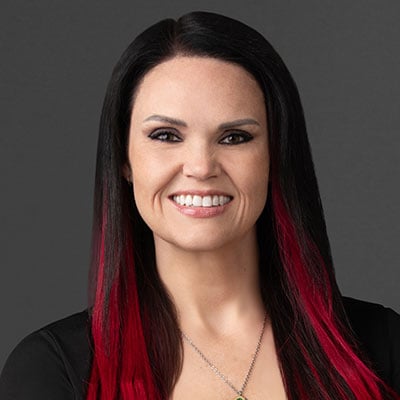
In episode four of the Absolute Credit video series, partners Lindsay Trapp and Jared Axelrod cover collateralized fund obligations’ (CFOs) evolution in the private credit and fund finance markets. They examine how asset mix, cash flow generation and liquidity mechanics shape these deals, and discuss ratings and regulatory considerations as CFOs become increasingly popular hybrid financing tools among GP-led structures, including in fundraising and liquidity solutions.
LT (00:10)
Good afternoon, and welcome to the Kirkland & Ellis Absolute Credit Series. I’m Lindsay Trapp. I’m a partner in the Kirkland New York office, and I am joined today by my partner and co-head of the Structured Capital & Insurance Solutions team, Jared Axelrod. Hi Jared, how are you?
JA (00:26)
Hey Lindsay, I’m great, how are you?
LT (00:28)
Excellent. So today we’re taking our viewers through the introduction into collateralized fund obligations, or CFOs. And I think we’re just gonna have a little chat about some of the things we’re seeing in the market, give a little bit of background to these products. So, really excited that you could join me today.
JA (00:47)
Yeah, happy to be here. I think we could just jump right in then.
LT (00:51)
Absolutely. So, I guess, from a lot of people’s perspective, what a CFO is tends to get a little bit blurred in the market, right? There’s a lot of names, words, fund-backed notes, PBNs, all sorts of different things. So, I think just to level set: For us, when we say CFO, or collateralized fund obligation, we are talking about an issuing vehicle that’s going to issue both debt and equity, and the underlying collateral of that vehicle is a number of underlying fund interests. So instead of a rated note feeder, which generally has just a singular fund interest as its underlying, here you’re looking at a number of underlying fund interests or, on occasion, we also see these in a structure where there may be a single underlying fund interest, but that fund itself is actually a fund of funds and so holds that diversity element in its portfolio. So that’s just kind of our little bit of background. But I guess Jared, these products actually have been around since before the GFC. So historically, I think they were traditionally led by limited partners that were aiming for a financing perspective. Is that kind of what you’ve typically seen in kind of years past for these structures?
JA (02:14)
Yeah, I think that’s right. So historically, it was more of a portfolio finance trade. You’ve got LPs who have interest in a variety of different GP funds. They have it on their balance sheet, and they utilize the CFO as a means to either move the assets off balance sheet entirely or just to put efficient financing in place. And so what they do is they’ll move the LP interests from their balance sheet into an SPV. They will issue several classes of debt. So, usually single A, triple B, double B and then issue an equity tranche. And historically the equity was retained by the sponsor effecting the transaction.
As of late though, the past year, 18 months, there’s been several transactions where some, or in some cases, all of the equity has been sold to third parties, which is really an interesting development in the market, and I think speaks to sort of the market coming to terms with how useful and how interesting of a trade this technology can be.
LT (03:28)
Absolutely. And so I guess from both of our perspectives, we’ve certainly been chatting a lot about how the market has shifted quite a bit toward more of a GP-led solution. So that comes in a few different varieties that we’ve seen. Sometimes it’s a GP balance sheet transaction. Sometimes it’s a capital raising goal, but other times there’s more of a liquidity solutions for some of their LPs and allowing them to transfer interests in, and you just completed a very big transaction kind of in that vein as well. So how did those different types of structures come to the fore?
JA (04:08)
Yeah. So like you said, on one side there is the sort of portfolio finance trade, on the other side is the fundraising exercise. One is sort of freeing up capital. The other is getting access to new capital, right? Getting access to new investors, whether it’s insurance companies, pension funds, different LPs that they don’t necessarily have a relationship with, whatever the case may be. And so those are the two basic types, but we also see combinations, right? So where you’ll do: move some assets off balance sheet and then at the same time open up a couple of new funds. So do both a fundraising and a portfolio finance trade.
LT (04:53)
Interesting, okay. And I think that, from my perspective as well, as a funds lawyer, I also find it very interesting sort of how these were used traditionally and what we’ve seen as a development here. For most of you, you all know I started my life as a private credit funds lawyer, but CFOs were traditionally a means of providing rated financing or rated collateral based on private equity. And so, mainly they tended to be private equity funds, but we’ve seen a pretty big jump in that as well over the last little while. So what kind of asset mixes are we seeing these days?
JA (05:30)
Yeah, so I think that’s right. I mean, we see private equity, private equity and credit, the credit being either private credit or public. So like BSL loans, usually it’s a combination of the two. And then you’ll also see pure credit CFOs. So that’s just a handful of private credit funds that have the CFO financing put in place. Which many people sort of ask, why not just do a CLO, right? When you think of putting these securitizations in place with, whether it’s a BSL portfolio, private credit or both, I mean, CLOs have been around for decades. It’s a very well-worn path. There’s a vibrant investor base, very efficient financing is able to be put in place. You know, you’re getting 10 turns of leverage on a BSL, CLO, depending on the strategy, you know, three, four, five, six turns of leverage for private credit. Why not just do that? And I don’t know what you’re seeing on your side, Lindsay, as far as sort of the calculus, but the people I’ve talked to sort of see them as two different, not necessarily mutually exclusive options, they’re tools that can be used depending on what the needs of that particular sponsor are. So what I mean by that is, with the funds option, so the CFO option, you get a lot more flexibility, right? Less concern with concentration, requirements, less restrictions with the types of assets you could buy. You just have a lot more flexibility, the trade-off being that you get lower leverage and potentially higher cost of capital. CLOs on the other hand, right, much more strict criteria set, eligibility criteria set, concentration limits, but you’re getting tighter pricing and better leverage.
LT (07:27)
Yeah, and I think you’re also giving up a bit on the rating side as well. That flexibility comes at a cost in a rating. So we don’t get all the way up to AAAs in CFOs. So that’s something that folks need to think about as well. But I think that really is the genesis of a lot of this kind of new mix of asset classes. We’ve certainly seen there’s obviously a lot of private credit in there. There’s also infrastructure debt, real estate debt. So there’s a number of different asset classes that are going into these. I think, I’ve been hearing some stuff about ABF as well, maybe as an underlying, there’s a lot in there.
But I think all of this kind of goes back to the fact that in the historical CFOs where you had these huge portfolios of like a hundred and plus private equity interests, the cash flows that came from that were largely created through the diversity of the life cycle of those underlying funds. So you had some in investment period, some like just in that transition and others that were in full harvest. And so there was a mix that allowed the distributions to be reliable enough to support the credit. But as the portfolios have become far more concentrated, the GP-led side, I think, generally we’re seeing anywhere between maybe five and 20 LP interests as the underlying. That certainly has necessitated either having a diversity in the actual underlying portfolio funds, or you might also in some instances see direct loans held or other cash producing instruments held within the CFO itself outside of fund interests, which is, particularly a development and an interest, but led by the fact that you have to have cash flows, right? We still have to service this debt. And of course, if we have insurance company investors out there, we’re talking about debt that needs to meet the long-term bond definition. So you are going to have to have those consistent cash flows to get in there.
I think that’s been a very interesting development as this market continues to grow and certainly grow it has. I think we’ve seen more issuance this year in the CFO space than any year prior. And we had the wonderful Bill Cox on from KBRA recently as well, who talked a lot about how that’s been working and the number of deals that they’re seeing in the market based on some of their publications. So very interesting kind of movements there.
From the funds perspective as well, I think it’s important to remind folks that you are dealing with funds. And so your underlying is a little bit different than how you have to deal with collateral from, for instance, the takeout of a warehouse for a CLO, right? Here, we have a lot of different things going on, and depending on which type of CFO you’re doing, it’s going to end up with its own kind of nuances that you have to deal with. In an LP-led CFO, you’ve got a whole team of funds lawyers that are gonna have to kind of get in there, deal with all of the GPs that you have, talk to them about their transfer cycles. You know, sometimes they’re off cycle. So we might be in a situation where we need to have everything ready to go for the transfer, but it won’t actually transfer in at the closing, making sure any side letters or those kinds of things work. And particularly the consent for the fact that this is going to be a transfer into a vehicle that is then going to offer security over that LP interest. So it is a lot in that perspective, but from the GP side, we’ve certainly been dealing a lot recently with folks who are moving their own GP interests into some of these. And in doing that, you do have to be at least conscious of the fact that if you hold that GP interest in your GP itself, you will probably need to get that converted into an LP interest. There are going to be consents in that regard. And kind of going back to your question about third-party equity or the discussion thereof, do you have an issue if you’re moving your own GP stakes in and you have other folks there if we can’t qualify that vehicle as an affiliate of the GP for the purposes of that transfer? So there’s a number of things that go along from the fund side. And so it is important to kind of speak to your attorneys in advance and kind of think through all of those different issues that can come there.
JA (12:07)
Yeah, I mean, it’s certainly way more complicated than just simply moving a portfolio of loans, right? These LP interests are not liquid. They’re not tradable. There’s so many requirements associated with what needs to be done, what you need to do in order to move these assets — well beyond my area of expertise. So definitely happy to have you and others on the funds team to sort of take that aspect of the trade off my plate because it’s a lot and to stay coordinated, you have all these different moving pieces, negotiating steps, you’re dealing with rating agencies. And then on the other side, right, have we done all the diligence for purposes of moving the assets? Did we get the consents? What’s required? Can we even move these assets? It’s lot going on for sure.
LT (12:55)
Absolutely, and one of the things that we tend to do in this industry is implement a holding vehicle underneath the issuer. So I think you had a wonderful slide that we were chatting about earlier. So maybe if we put up the structure chart to kind of help folks get a visual of what this often will look like in the context of those transfers.
JA (13:19)
Yeah, the slides always help when talking about something like this for sure. So here, we have just a sample CFO structure. You have the CFO issuer in the middle. So that’s the entity special purpose vehicle issuing the debt. We have the rated senior debt, Class A, Class B, Class C and then the equity. The equity can take different forms. Could be subordinated notes, subordinated loans, LP interests, but the main idea being that the economic first loss is represented by that interest in the CFO issuer. Below that, sitting directly below the CFO issuers, what’s commonly referred to as “Asset Co.” So this is where all the assets sit, right. So all the LP interests that are being transferred into the CFO are held by Asset Co. That entity, the Asset Co, all of its interests are pledged by the CFO, typically, and there’s some variety in the market, but typically, we do not pledge the actual LP interest, usually because there are some sort of restrictions on the underlying fund documents that preclude the ability to pledge those. So the way you deal with it is, have Asset Co’s interests that are held again by the issuer as part of the collateral package.
LT (14:49)
Yeah, absolutely, certainly something that can be very helpful there. Obviously, things to think about as you’re going through, right? If there were an enforcement scenario, even though it comes in one big package, that ultimately may mean that somebody else is holding those interests in the fund. So lots of things to keep in the back of your mind, particularly if you’re transferring in your own GP interests into that from the GP side. And then from the LP side, certainly taking a look at, or I should say note holders, taking a look at that package, how that would ultimately operate and what you would end up with in the context of an enforcement. It’s certainly something to think through and can be very helpful. And of course, we’re happy to provide this slide if you want to reach out and have a chat about this.
I think another thing maybe just to chat on a little bit is from the ratings perspective, you and I certainly have seen recently a, let’s say influx of evergreen structures as the underlying funds. Not usually all of them, but certainly having a few in there. And I think it’s important for folks to remember, there are going to be similar analyses as we have in the context of rated funds that go into an evergreen fund. And there will be a question, how do we get out of this fund? So if you have something like a BDC or a liquid fund that operates on a NAV pay basis for redemption, you will need to think through and there will be rating agency considerations around that market risk that continues to exist while you’re going through the redemption process. You have questions about gating and sort of how long is it going to take us to get out? So certainly, think through those things. If you have more than one evergreen fund in there, you’re going to have to consider that in kind of all of their various forms. Obviously, if there’s a slow pay mechanic, that’s fairly straightforward because we just need to select a date on which the CFO will redeem from that fund. But, you know, lots of things from the fund side in these, which is, you know, just true to their nature of being a very hybrid approach between the securitization side and the fund formation side, which is, I think, probably why I like them the most.
JA (17:24)
It’s definitely an interesting puzzle, right? It’s like with most things in this structure, you really just need to make sure you’re matching up the assets with liabilities, right? The maturity of the assets with the maturity of the liabilities. And it’s really an interesting development for sure.
LT (17:40)
Absolutely. One of the questions we get a lot is around liquidity. So you do have a bunch of underlying funds, which may have capital calls still do coming out to them. So what have you been seeing in the context of how we solve for that?
JA (17:57)
Right, so you need to have cash, right? There have to be cash flows in the securitization. It’s pretty obvious. Not only to service the debt, but also to the extent you get a capital call and there’s not enough time to fund for one reason or another. You can’t call it from the note holders. What do you do, right? And so there’s a couple tools out there, right? So you have liquidity facilities. So that’s really just a revolving credit facility being provided by a third-party financing source. Oftentimes, frankly, we’ll see the party that provides the liquidity facility to also invest in the deal. So they’ll come into the class A notes, and they will also be the liquidity facility provider. Another alternative is to have an interest reserve account. So that’s a spot in the waterfall that you re-up every time the amount of cash drops below a certain threshold. And the threshold is three months, six months, nine months, whatever the number is, whatever has been modeled into the deal of cash to pay interest and expenses of the deal. And so it’s a deal that sort of acknowledges that there may be a shortfall or there may be a timing mismatch from what the underlying interests are producing from a cashflow perspective versus when the interest and expenses are due. Another option is to have something like a credit SMA as one of your fund interests, right? So you create a fund-of-one, which is the only LP is the CFO issuer, and you just set aside a certain amount of commitments to invest in liquid and illiquid credit assets, right? So whether it’s private credit loans or CLO bonds or BSL loans, whatever it may be, the point is you’re deploying the capital from the investors in order to produce cash flows for purposes of servicing the debt of the CFO.
LT (20:10)
Yeah, those are certainly the credit SMAs get very interesting. I’ve done have done several of those on the formation side. And I think that they provide an interesting solution. Certainly, when you’re doing something with an external lending provider, that’s a cost to the equity returns in the deal. So it’s something to think through. Obviously there can be impacts to the equity returns through doing underlying investments and things other than the main focus of the issuer. But certainly something that I think there are so many good options out there, and it really is just something that managers need to think through what’s going to fit best and then model out for this particular deal and see how we can get there to provide that coverage and to make sure that we always have enough capital somewhere to make sure that we’re keeping ourselves from becoming a defaulting LP and those underlying funds, but also paying our note holders, which is great.
Excellent. So I guess to bring ourselves full circle on this discussion, let’s talk through some of the additional regulatory considerations that we see from particularly the securitization side. Definitely our good old friend risk retention on both sides of the pond can come into these now that we’re seeing a number of non-U.S. investors interested in taking down positions in these CFOs.
So what are the thoughts that we need to have in the context of both EU and, well, EU-UK and U.S. risk retention?
JA (21:50)
Yeah, so just starting with the U.S. side of things. So this is a securitization, right? We have underlying assets being put into an SPV. We’re issuing debt, whether you call it securities or not. You need to think about whether or not U.S. risk retention applies. So simply put, the underlying interests are limited partnership interests. Limited partnership interests are not self-liquidating assets. That is a key component of U.S. risk retention. If there are not self-liquidating assets, then U.S. risk retention does not apply. There are certain circumstances where you need to sort of do a little bit more analysis, and there’s myriad fact patterns where you would need to sort of do more than just say, are there LP interests? But the bottom line is that these securitizations are generally not subject to U.S. risk retention. On the other side, European, UK risk retention, it’s not as simple as that. The fact that there are LP interests doesn’t end the inquiry. And typically, you need to look through to see what are the underlying assets. So if we’re talking about a pure private equity CFO, then the answer is no. EU risk retention does not apply. If we’re talking about pure credit CFO, then the answer is probably yes. And then as you know, there are different CFOs that are private equity and credit, the infrastructure, real estate, it really varies. The important point is that it depends, and you really need to look at what the underlying assets are.
LT (23:43)
Yeah, absolutely, and you know, certainly speak to those regulatory folks early on in the process. You know, it can definitely jump up to get you, you know, the other consideration …
JA (23:58)
… the last thing you want is right before you price, you go to your regulatory folks and say, does U.S. risk retention apply? Does EU risk retention apply? We’re pricing tomorrow. That is not where you want to be.
LT (24:10)
Exactly. That is not the place that you want to be when you’re coming up to the ends of these. And I think just for the wider grouping of audience, these are complex vehicles. They involve a lot of considerations, and they are truly a hybrid, so you will have funds considerations and you will have securities and securitization considerations. So it’s important to gather a team that has kind of an understanding of all of these things, both from the external service provider and from your internal teams as well, I think would generally be our experience. But they are really wonderful products and have been quite successful and are continuing to grow in use and popularity and investor familiarity as well. So certainly we are here, and we are happy to discuss with you if you have a desire to know more or to begin a project. And we are very thankful today for Jared coming on to help give this introduction. And we look forward to seeing you guys in the next episode.
JA (25:17)
Glad to be here. Thanks, Lindsay.
LT (00:10)
Good afternoon, and welcome to the Kirkland & Ellis Absolute Credit Series. I’m Lindsay Trapp. I’m a partner in the Kirkland New York office, and I am joined today by my partner and co-head of the Structured Capital & Insurance Solutions team, Jared Axelrod. Hi Jared, how are you?
JA (00:26)
Hey Lindsay, I’m great, how are you?
LT (00:28)
Excellent. So today we’re taking our viewers through the introduction into collateralized fund obligations, or CFOs. And I think we’re just gonna have a little chat about some of the things we’re seeing in the market, give a little bit of background to these products. So, really excited that you could join me today.
JA (00:47)
Yeah, happy to be here. I think we could just jump right in then.
LT (00:51)
Absolutely. So, I guess, from a lot of people’s perspective, what a CFO is tends to get a little bit blurred in the market, right? There’s a lot of names, words, fund-backed notes, PBNs, all sorts of different things. So, I think just to level set: For us, when we say CFO, or collateralized fund obligation, we are talking about an issuing vehicle that’s going to issue both debt and equity, and the underlying collateral of that vehicle is a number of underlying fund interests. So instead of a rated note feeder, which generally has just a singular fund interest as its underlying, here you’re looking at a number of underlying fund interests or, on occasion, we also see these in a structure where there may be a single underlying fund interest, but that fund itself is actually a fund of funds and so holds that diversity element in its portfolio. So that’s just kind of our little bit of background. But I guess Jared, these products actually have been around since before the GFC. So historically, I think they were traditionally led by limited partners that were aiming for a financing perspective. Is that kind of what you’ve typically seen in kind of years past for these structures?
JA (02:14)
Yeah, I think that’s right. So historically, it was more of a portfolio finance trade. You’ve got LPs who have interest in a variety of different GP funds. They have it on their balance sheet, and they utilize the CFO as a means to either move the assets off balance sheet entirely or just to put efficient financing in place. And so what they do is they’ll move the LP interests from their balance sheet into an SPV. They will issue several classes of debt. So, usually single A, triple B, double B and then issue an equity tranche. And historically the equity was retained by the sponsor effecting the transaction.
As of late though, the past year, 18 months, there’s been several transactions where some, or in some cases, all of the equity has been sold to third parties, which is really an interesting development in the market, and I think speaks to sort of the market coming to terms with how useful and how interesting of a trade this technology can be.
LT (03:28)
Absolutely. And so I guess from both of our perspectives, we’ve certainly been chatting a lot about how the market has shifted quite a bit toward more of a GP-led solution. So that comes in a few different varieties that we’ve seen. Sometimes it’s a GP balance sheet transaction. Sometimes it’s a capital raising goal, but other times there’s more of a liquidity solutions for some of their LPs and allowing them to transfer interests in, and you just completed a very big transaction kind of in that vein as well. So how did those different types of structures come to the fore?
JA (04:08)
Yeah. So like you said, on one side there is the sort of portfolio finance trade, on the other side is the fundraising exercise. One is sort of freeing up capital. The other is getting access to new capital, right? Getting access to new investors, whether it’s insurance companies, pension funds, different LPs that they don’t necessarily have a relationship with, whatever the case may be. And so those are the two basic types, but we also see combinations, right? So where you’ll do: move some assets off balance sheet and then at the same time open up a couple of new funds. So do both a fundraising and a portfolio finance trade.
LT (04:53)
Interesting, okay. And I think that, from my perspective as well, as a funds lawyer, I also find it very interesting sort of how these were used traditionally and what we’ve seen as a development here. For most of you, you all know I started my life as a private credit funds lawyer, but CFOs were traditionally a means of providing rated financing or rated collateral based on private equity. And so, mainly they tended to be private equity funds, but we’ve seen a pretty big jump in that as well over the last little while. So what kind of asset mixes are we seeing these days?
JA (05:30)
Yeah, so I think that’s right. I mean, we see private equity, private equity and credit, the credit being either private credit or public. So like BSL loans, usually it’s a combination of the two. And then you’ll also see pure credit CFOs. So that’s just a handful of private credit funds that have the CFO financing put in place. Which many people sort of ask, why not just do a CLO, right? When you think of putting these securitizations in place with, whether it’s a BSL portfolio, private credit or both, I mean, CLOs have been around for decades. It’s a very well-worn path. There’s a vibrant investor base, very efficient financing is able to be put in place. You know, you’re getting 10 turns of leverage on a BSL, CLO, depending on the strategy, you know, three, four, five, six turns of leverage for private credit. Why not just do that? And I don’t know what you’re seeing on your side, Lindsay, as far as sort of the calculus, but the people I’ve talked to sort of see them as two different, not necessarily mutually exclusive options, they’re tools that can be used depending on what the needs of that particular sponsor are. So what I mean by that is, with the funds option, so the CFO option, you get a lot more flexibility, right? Less concern with concentration, requirements, less restrictions with the types of assets you could buy. You just have a lot more flexibility, the trade-off being that you get lower leverage and potentially higher cost of capital. CLOs on the other hand, right, much more strict criteria set, eligibility criteria set, concentration limits, but you’re getting tighter pricing and better leverage.
LT (07:27)
Yeah, and I think you’re also giving up a bit on the rating side as well. That flexibility comes at a cost in a rating. So we don’t get all the way up to AAAs in CFOs. So that’s something that folks need to think about as well. But I think that really is the genesis of a lot of this kind of new mix of asset classes. We’ve certainly seen there’s obviously a lot of private credit in there. There’s also infrastructure debt, real estate debt. So there’s a number of different asset classes that are going into these. I think, I’ve been hearing some stuff about ABF as well, maybe as an underlying, there’s a lot in there.
But I think all of this kind of goes back to the fact that in the historical CFOs where you had these huge portfolios of like a hundred and plus private equity interests, the cash flows that came from that were largely created through the diversity of the life cycle of those underlying funds. So you had some in investment period, some like just in that transition and others that were in full harvest. And so there was a mix that allowed the distributions to be reliable enough to support the credit. But as the portfolios have become far more concentrated, the GP-led side, I think, generally we’re seeing anywhere between maybe five and 20 LP interests as the underlying. That certainly has necessitated either having a diversity in the actual underlying portfolio funds, or you might also in some instances see direct loans held or other cash producing instruments held within the CFO itself outside of fund interests, which is, particularly a development and an interest, but led by the fact that you have to have cash flows, right? We still have to service this debt. And of course, if we have insurance company investors out there, we’re talking about debt that needs to meet the long-term bond definition. So you are going to have to have those consistent cash flows to get in there.
I think that’s been a very interesting development as this market continues to grow and certainly grow it has. I think we’ve seen more issuance this year in the CFO space than any year prior. And we had the wonderful Bill Cox on from KBRA recently as well, who talked a lot about how that’s been working and the number of deals that they’re seeing in the market based on some of their publications. So very interesting kind of movements there.
From the funds perspective as well, I think it’s important to remind folks that you are dealing with funds. And so your underlying is a little bit different than how you have to deal with collateral from, for instance, the takeout of a warehouse for a CLO, right? Here, we have a lot of different things going on, and depending on which type of CFO you’re doing, it’s going to end up with its own kind of nuances that you have to deal with. In an LP-led CFO, you’ve got a whole team of funds lawyers that are gonna have to kind of get in there, deal with all of the GPs that you have, talk to them about their transfer cycles. You know, sometimes they’re off cycle. So we might be in a situation where we need to have everything ready to go for the transfer, but it won’t actually transfer in at the closing, making sure any side letters or those kinds of things work. And particularly the consent for the fact that this is going to be a transfer into a vehicle that is then going to offer security over that LP interest. So it is a lot in that perspective, but from the GP side, we’ve certainly been dealing a lot recently with folks who are moving their own GP interests into some of these. And in doing that, you do have to be at least conscious of the fact that if you hold that GP interest in your GP itself, you will probably need to get that converted into an LP interest. There are going to be consents in that regard. And kind of going back to your question about third-party equity or the discussion thereof, do you have an issue if you’re moving your own GP stakes in and you have other folks there if we can’t qualify that vehicle as an affiliate of the GP for the purposes of that transfer? So there’s a number of things that go along from the fund side. And so it is important to kind of speak to your attorneys in advance and kind of think through all of those different issues that can come there.
JA (12:07)
Yeah, I mean, it’s certainly way more complicated than just simply moving a portfolio of loans, right? These LP interests are not liquid. They’re not tradable. There’s so many requirements associated with what needs to be done, what you need to do in order to move these assets — well beyond my area of expertise. So definitely happy to have you and others on the funds team to sort of take that aspect of the trade off my plate because it’s a lot and to stay coordinated, you have all these different moving pieces, negotiating steps, you’re dealing with rating agencies. And then on the other side, right, have we done all the diligence for purposes of moving the assets? Did we get the consents? What’s required? Can we even move these assets? It’s lot going on for sure.
LT (12:55)
Absolutely, and one of the things that we tend to do in this industry is implement a holding vehicle underneath the issuer. So I think you had a wonderful slide that we were chatting about earlier. So maybe if we put up the structure chart to kind of help folks get a visual of what this often will look like in the context of those transfers.
JA (13:19)
Yeah, the slides always help when talking about something like this for sure. So here, we have just a sample CFO structure. You have the CFO issuer in the middle. So that’s the entity special purpose vehicle issuing the debt. We have the rated senior debt, Class A, Class B, Class C and then the equity. The equity can take different forms. Could be subordinated notes, subordinated loans, LP interests, but the main idea being that the economic first loss is represented by that interest in the CFO issuer. Below that, sitting directly below the CFO issuers, what’s commonly referred to as “Asset Co.” So this is where all the assets sit, right. So all the LP interests that are being transferred into the CFO are held by Asset Co. That entity, the Asset Co, all of its interests are pledged by the CFO, typically, and there’s some variety in the market, but typically, we do not pledge the actual LP interest, usually because there are some sort of restrictions on the underlying fund documents that preclude the ability to pledge those. So the way you deal with it is, have Asset Co’s interests that are held again by the issuer as part of the collateral package.
LT (14:49)
Yeah, absolutely, certainly something that can be very helpful there. Obviously, things to think about as you’re going through, right? If there were an enforcement scenario, even though it comes in one big package, that ultimately may mean that somebody else is holding those interests in the fund. So lots of things to keep in the back of your mind, particularly if you’re transferring in your own GP interests into that from the GP side. And then from the LP side, certainly taking a look at, or I should say note holders, taking a look at that package, how that would ultimately operate and what you would end up with in the context of an enforcement. It’s certainly something to think through and can be very helpful. And of course, we’re happy to provide this slide if you want to reach out and have a chat about this.
I think another thing maybe just to chat on a little bit is from the ratings perspective, you and I certainly have seen recently a, let’s say influx of evergreen structures as the underlying funds. Not usually all of them, but certainly having a few in there. And I think it’s important for folks to remember, there are going to be similar analyses as we have in the context of rated funds that go into an evergreen fund. And there will be a question, how do we get out of this fund? So if you have something like a BDC or a liquid fund that operates on a NAV pay basis for redemption, you will need to think through and there will be rating agency considerations around that market risk that continues to exist while you’re going through the redemption process. You have questions about gating and sort of how long is it going to take us to get out? So certainly, think through those things. If you have more than one evergreen fund in there, you’re going to have to consider that in kind of all of their various forms. Obviously, if there’s a slow pay mechanic, that’s fairly straightforward because we just need to select a date on which the CFO will redeem from that fund. But, you know, lots of things from the fund side in these, which is, you know, just true to their nature of being a very hybrid approach between the securitization side and the fund formation side, which is, I think, probably why I like them the most.
JA (17:24)
It’s definitely an interesting puzzle, right? It’s like with most things in this structure, you really just need to make sure you’re matching up the assets with liabilities, right? The maturity of the assets with the maturity of the liabilities. And it’s really an interesting development for sure.
LT (17:40)
Absolutely. One of the questions we get a lot is around liquidity. So you do have a bunch of underlying funds, which may have capital calls still do coming out to them. So what have you been seeing in the context of how we solve for that?
JA (17:57)
Right, so you need to have cash, right? There have to be cash flows in the securitization. It’s pretty obvious. Not only to service the debt, but also to the extent you get a capital call and there’s not enough time to fund for one reason or another. You can’t call it from the note holders. What do you do, right? And so there’s a couple tools out there, right? So you have liquidity facilities. So that’s really just a revolving credit facility being provided by a third-party financing source. Oftentimes, frankly, we’ll see the party that provides the liquidity facility to also invest in the deal. So they’ll come into the class A notes, and they will also be the liquidity facility provider. Another alternative is to have an interest reserve account. So that’s a spot in the waterfall that you re-up every time the amount of cash drops below a certain threshold. And the threshold is three months, six months, nine months, whatever the number is, whatever has been modeled into the deal of cash to pay interest and expenses of the deal. And so it’s a deal that sort of acknowledges that there may be a shortfall or there may be a timing mismatch from what the underlying interests are producing from a cashflow perspective versus when the interest and expenses are due. Another option is to have something like a credit SMA as one of your fund interests, right? So you create a fund-of-one, which is the only LP is the CFO issuer, and you just set aside a certain amount of commitments to invest in liquid and illiquid credit assets, right? So whether it’s private credit loans or CLO bonds or BSL loans, whatever it may be, the point is you’re deploying the capital from the investors in order to produce cash flows for purposes of servicing the debt of the CFO.
LT (20:10)
Yeah, those are certainly the credit SMAs get very interesting. I’ve done have done several of those on the formation side. And I think that they provide an interesting solution. Certainly, when you’re doing something with an external lending provider, that’s a cost to the equity returns in the deal. So it’s something to think through. Obviously there can be impacts to the equity returns through doing underlying investments and things other than the main focus of the issuer. But certainly something that I think there are so many good options out there, and it really is just something that managers need to think through what’s going to fit best and then model out for this particular deal and see how we can get there to provide that coverage and to make sure that we always have enough capital somewhere to make sure that we’re keeping ourselves from becoming a defaulting LP and those underlying funds, but also paying our note holders, which is great.
Excellent. So I guess to bring ourselves full circle on this discussion, let’s talk through some of the additional regulatory considerations that we see from particularly the securitization side. Definitely our good old friend risk retention on both sides of the pond can come into these now that we’re seeing a number of non-U.S. investors interested in taking down positions in these CFOs.
So what are the thoughts that we need to have in the context of both EU and, well, EU-UK and U.S. risk retention?
JA (21:50)
Yeah, so just starting with the U.S. side of things. So this is a securitization, right? We have underlying assets being put into an SPV. We’re issuing debt, whether you call it securities or not. You need to think about whether or not U.S. risk retention applies. So simply put, the underlying interests are limited partnership interests. Limited partnership interests are not self-liquidating assets. That is a key component of U.S. risk retention. If there are not self-liquidating assets, then U.S. risk retention does not apply. There are certain circumstances where you need to sort of do a little bit more analysis, and there’s myriad fact patterns where you would need to sort of do more than just say, are there LP interests? But the bottom line is that these securitizations are generally not subject to U.S. risk retention. On the other side, European, UK risk retention, it’s not as simple as that. The fact that there are LP interests doesn’t end the inquiry. And typically, you need to look through to see what are the underlying assets. So if we’re talking about a pure private equity CFO, then the answer is no. EU risk retention does not apply. If we’re talking about pure credit CFO, then the answer is probably yes. And then as you know, there are different CFOs that are private equity and credit, the infrastructure, real estate, it really varies. The important point is that it depends, and you really need to look at what the underlying assets are.
LT (23:43)
Yeah, absolutely, and you know, certainly speak to those regulatory folks early on in the process. You know, it can definitely jump up to get you, you know, the other consideration …
JA (23:58)
… the last thing you want is right before you price, you go to your regulatory folks and say, does U.S. risk retention apply? Does EU risk retention apply? We’re pricing tomorrow. That is not where you want to be.
LT (24:10)
Exactly. That is not the place that you want to be when you’re coming up to the ends of these. And I think just for the wider grouping of audience, these are complex vehicles. They involve a lot of considerations, and they are truly a hybrid, so you will have funds considerations and you will have securities and securitization considerations. So it’s important to gather a team that has kind of an understanding of all of these things, both from the external service provider and from your internal teams as well, I think would generally be our experience. But they are really wonderful products and have been quite successful and are continuing to grow in use and popularity and investor familiarity as well. So certainly we are here, and we are happy to discuss with you if you have a desire to know more or to begin a project. And we are very thankful today for Jared coming on to help give this introduction. And we look forward to seeing you guys in the next episode.
JA (25:17)
Glad to be here. Thanks, Lindsay.