Litigators of the Week: An Early Win for Eli Lilly in Showdown Over GLP-1 Ads
Gregg LoCascio, Diana Watral and T.J. McCarrick participated in a Q&A as part of The American Lawyer Litigation Daily's "Litigator of the Week" feature. Kirkland was recognized for its recent win for Eli Lilly involving advertising for Lilly’s GLP-1 drugs. Robin McCue, Josh Berlowitz, Maggie LaPoint, Saunders McElroy, Adelaide Daughtridge, Ashley Ross, Ashley Cade, Angela Chang, Chris Michel and Zach Lustbader were also highlighted.
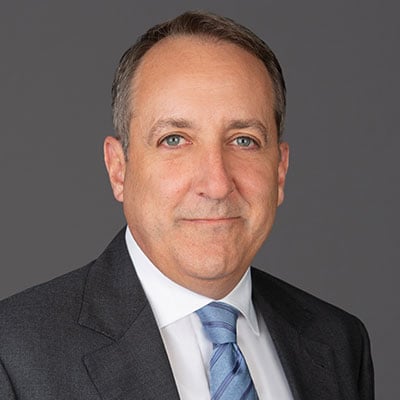
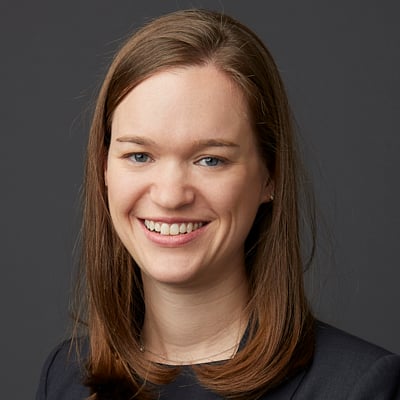
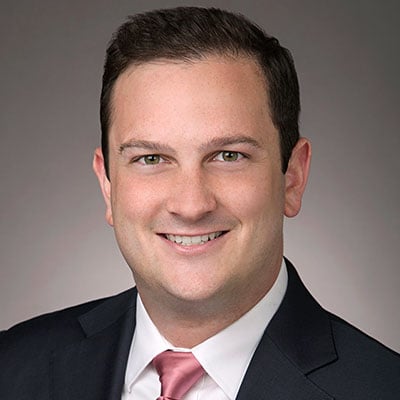
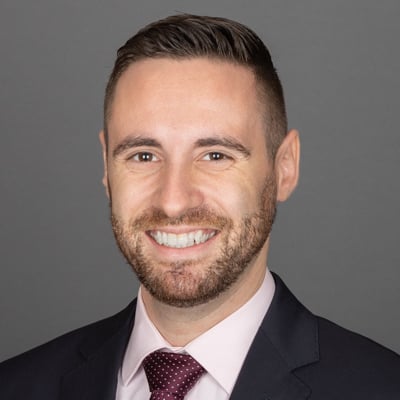
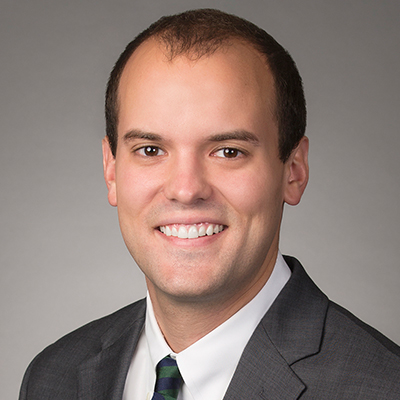
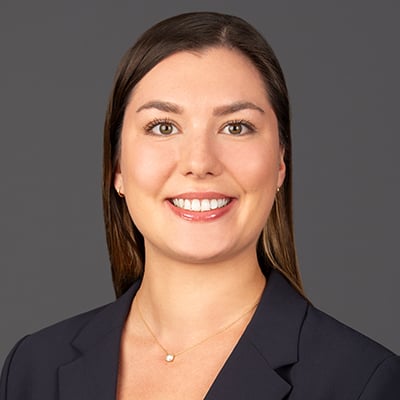
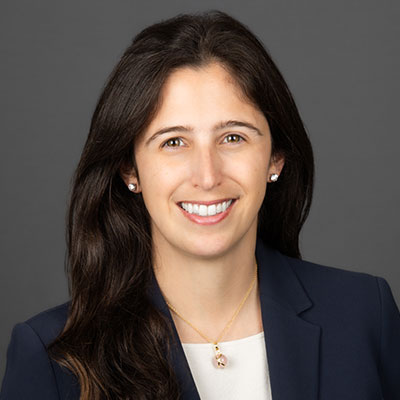
Our Litigators of the Week are Gregg LoCascio, Diana Watral and T.J. McCarrick of Kirkland & Ellis.
A federal judge in New Jersey handed their client Eli Lilly & Co. an early but significant victory in its escalating battle with Novo Nordisk over advertising claims in the market for GLP-1 drugs. After a two-day evidentiary hearing, U.S. District Judge Zahid Quraishi denied Novo's bid for a preliminary injunction that would have barred Lilly from continuing to run certain advertisements comparing the performance of the companies' rival weight-loss and diabetes medicines.
The judge pointed to Novo's failure to prove irreparable harm and credibility concerns surrounding a key Novo witness. Quraishi also found merit in Lilly's argument that Novo's own advertising practices undermined its request for equitable relief.
What was at stake for Eli Lilly here?
Gregg LoCascio: Lilly’s entire business is based on bringing innovative medicines to patients and backing that up with science. That’s why Lilly invested the time and money to run head-to-head clinical trials between its GLP-1 medicines, Zepbound and Mounjaro, and Novo’s rival GLP-1 drugs. Because those clinical trials showed that Lilly’s medicines outperformed Novo’s competing doses, Lilly published that science and properly included it in its advertising to allow patients to discuss and consider that data with their doctors. On the other hand, when Novo launched new doses, it chose not to run its own head-to-head studies, but instead sued Lilly to try to prevent further discussion about the only head-to-head studies of these GLP-1 medicines. While the GLP-1 market is important to Lilly, its commitment to science is even more important; so shelving undisputed, head-to-head clinical studies was something Lilly could never accept.
How did this matter come to you and your firm?
Diana Watral: I’m lead counsel for Lilly on several significant litigation matters involving Lilly’s GLP-1 medicines, so when Novo filed this case, we were able to hit the ground running. Plus, Gregg is an expert false advertising lawyer, so it was only natural that we’d combine forces on this one. Over the years, we’ve gotten to know Lilly’s business from the inside, and one thing comes through loud and clear: Science drives everything they do. That’s not just a talking point for them. It shapes how they develop their medicines, how they run their clinical studies, and how they talk about their results. So when Novo challenged that work, it mattered deeply to us that we stand up for the science and for what’s right for patients. We were completely aligned with Lilly on making sure patients and science came first. I feel really fortunate that Lilly continues to trust us with their most important litigation, including this case.
Judge Quraishi elected to conduct a two-day evidentiary hearing rather than decide the motion on a paper record with argument. How did that shape your approach and your preparation?
T.J. McCarrick: Lilly wanted an evidentiary hearing from the moment it saw Novo’s injunction papers. Interestingly, at the initial case management conference, Novo’s counsel suggested the court decide the matter on the papers, something that the court promptly rejected even before we could weigh in. The court made clear there would be an in-person evidentiary hearing where witnesses would be examined with their credibility assessed. After the briefs were submitted, Novo took another run at avoiding having certain witnesses testify live, including its irreparable injury declarant, Mr. Gastineau. Without the benefit of any discovery, we worked this case up with an eye towards having Lilly’s witnesses explain to the court the validity and importance of head-to-head clinical data and the accuracy of its advertising, while simultaneously planning a vigorous cross examination of Novo’s six witnesses to debunk their allegations.
When you walked into that hearing, what did you view as the one or two issues most likely to decide the motion?
LoCascio: The lack of irreparable injury of course was a focus, as it is often the linchpin of a preliminary injunction hearing. But because judges are also consumers, persuading the court that your advertisements are truthful and accurate is also critical in any false advertising case. So going in we knew we had to emphasize two points: First, that Lilly’s advertising was literally truthful—a fact made easier to prove given that Lilly’s clinical trials were indisputably gold-standard science, so much so that Novo’s CEO had to admit that fact to Mad Money’s Jim Cramer during a televised interview prior to the hearing. Second, we knew that we had to come out ahead on the survey evidence, which takes time to unpack, especially in an expedited proceeding with a dozen witnesses. Novo’s decision to use different survey experts for the Zepbound and Mounjaro advertising allowed us to highlight the bias and differences between their surveys, undermining both in the process. To that end, in discussing the weakness of Novo’s claim, the court noted that “the design of Novo’s studies as to consumer confusion left doubts as to their value.”
Who was on your team and how did you divide the work in the run-up to this hearing, as well as during the testimony and argument?
McCarrick: In addition to the three of us, this was classic Kirkland—a tireless show of force and collaboration by many talented people under tight summertime deadlines, each taking ownership of key portions of the case. Robin McCue—one of Kirkland’s thought leaders on advertising law—Josh Berlowitz and Maggie LaPoint were in charge of consumer survey work. Saunders McElroy and Adelaide Daughtridge had point on Lilly and Novo’s advertising practices. Ashley Ross, Ashley Cade and Angela Chang owned the GLP-1 science workstream. We were also fortunate to have Chris Michel and Zach Lustbader—two recent additions to Kirkland—who knocked the cover off the ball on the legal briefing. And of course, we couldn’t have done it without an amazing team of legal assistants, tech and graphics support, and practice assistants who make our work possible. The team not only powered through the briefing and lead-up to the hearing, but were all involved in pulling off an evidentiary hearing with twelve witnesses, plus openings and closings.
The court ultimately focused heavily on irreparable harm. At what point in your preparation did you decide that would be a centerpiece of your defense?
LoCascio: We focused on the absence of harm from the get-go. Novo didn’t submit the kind of evidence you usually see from a business that has actually been harmed, much less irreparably so—no ordinary course documents showing consumer confusion, no modeling of sales before and after the challenged advertisements aired, and no attempt to even try to quantify losses to brand equity, reputation or goodwill. Novo’s delay in bringing suit was also inconsistent with a business that was allegedly being irreparably injured. At the hearing, we emphasized and the court zeroed in on Novo’s burden to prove they were harmed and the absence of any evidence to back up Novo’s allegations.
The opinion was unusually critical of Novo witness Derrick Gastineau, an executive who leads Wegovy marketing. As you were questioning witnesses and listening to the testimony unfold, did you have a sense that his testimony was helping Lilly's case?
Watral: Our partner Ashley Ross cross examined Mr. Gastineau and did a masterful job. As her examination was happening, it was clear that Novo’s harm story went from thin to non-existent and that their witness was being evasive and losing credibility trying to stick to the Novo party line. It was perhaps most palpable when the witness was confronted with Novo’s own securities filings that quantified goodwill just moments after he’d claimed under oath that such a quantification couldn’t be done. It was amazing to watch in real time, and it’s certainly not every day that a judge makes such a clear adverse credibility finding in writing. I’ve worked with Ash for years, and I was really proud to watch her transform a Novo witness into one of our most powerful sources of evidence.
Many lawyers would treat a plaintiff's prior conduct as background noise. What made you believe Novo's own advertising practices could become a winning issue for you?
McCarrick: Novo’s advertising was a massive credibility problem for their case. As the court’s order points out, for over a year, Novo had on its consumer-facing website a graphic comparing results of patients using Novo’s Ozempic with results of patients being treated with Lilly’s Trulicity—all based on a head-to-head study that didn’t measure results for the highest doses of Trulicity that had become available on the market—the very behavior that Novo was complaining about. Lilly’s phenomenal in-house legal team knows this space like the back of their hand and identified Novo’s hypocrisy almost immediately. After some quick investigating, we learned that Novo removed those graphics from its website mere days before filing its lawsuit against Lilly. The point wasn’t necessarily that Novo had done something nefarious; but instead that its litigation position was flatly inconsistent with how it had behaved commercially and that Lilly’s advertising of head-to-head results was consistent with industry practices, including Novo’s own practices.
Watral: I’ll echo TJ’s shout-out to the Lilly team on this one. Lilly has an unbelievably talented in-house team, and they spotted right away that Novo was doing the very thing it accused Lilly of doing. That insight shaped our strategy from day one. We truly value our partnership with Lilly—we work through every strategy decision together, and that collaboration makes for a much better outcome.
Gregg, as you prepared for closing, were you consciously trying to give the court multiple independent grounds to deny the injunction? Looking at the opinion, the court's discussion of irreparable harm, witness credibility and unclean hands seems to track closely with the themes Lilly emphasized at the hearing.
LoCascio: It’s certainly rewarding when the court’s decision tracks the arguments you emphasize in the hearing and at closing. The evidence at trial allowed us to make compelling arguments on all three of those grounds, as well as attack the legal merits of Novo’s claim overall. Although you only need to persuade the court to go your way on one ground to defend against a preliminary injunction, because we had the evidence to back it up, we absolutely argued for denial on multiple grounds, because it makes for a stronger opinion and can also lead the plaintiff to realize that their case is weak and not worth pursuing.
When you boil it down, was this case about what the clinical data showed, or was it about what Novo could prove happened in the marketplace because of Lilly's advertising?
Watral: I think it’s actually both—as Gregg said during closing, “Lilly's science is unassailable and Lilly's advertisements are truthful.” Every Novo witness had to admit that Lilly’s clinical data was truthful and accurately reported in the challenged advertisements, which put Novo’s merits case on shaky ground to start. And the survey evidence didn’t support its claim either. I believe that Novo ultimately couldn’t prove any injury in the marketplace not for lack of trying, but because there just couldn’t be any harm caused by truthful ads.
What comes next here?
Watral: Looking at the timing of Novo’s suit and the press campaign that came with it, it seems Novo may have been just as interested in making news last summer as in actually pursuing this case. We don’t see a reason for Novo to keep going forward now that the court has rejected its preliminary injunction motion and called its case “less than persuasive for a number of reasons.” But if it does, we’ll keep standing up for Lilly. Patients deserve continued access to the only head-to-head clinical trial data that exists for these medicines.
What will you remember most about this matter?
LoCascio: In every successful case, the team makes it happen, but here, even more than usual, every member of the team willingly jumped on board without a moment’s hesitation, gave 150%, and supported each other at every turn. I was particularly indebted to Diana, T.J. and Robin who took the initial laboring oars when Novo filed out of the blue in the last week of July. I had originally planned to be off the grid in Alaska on the day of the initial scheduling conference, but stayed back to make sure I would have a working cell signal. I’ll always remember the sight of a bear walking directly past my window at 6 a.m. right when Judge Quraishi started the call. While I wasn’t sure at the time, I’m willing to now go on record with the opinion that a bear sighting when you start a hearing qualifies as a good omen.
Watral: Two things stand out for me. First, we were so fortunate that Lilly’s Chief Medical Officer could take the stand, and preparing with him for his direct exam was a real privilege. The passion for Lilly’s science and for what its medicines mean to patients is genuine, and my job was to give him the platform to share that with the court. When the person who knows the science best explains it himself, it carries a weight no lawyer can match. Second, the way Kirkland lawyers came together to deliver for Lilly. This case kicked off a demanding stretch for me of back-to-back matters for Lilly—this PI, then a two-week breach-of-contract trial, and then Rule 702 closing arguments in the GLP-1 MDL, all within weeks. Pulling that off takes deep benches of talented people who step up at every turn, and I couldn’t have done any of it without my amazing teams.
McCarrick: I’m tempted to say the fire drill that evacuated our hotel conference space in the middle of prep a few days before the hearing, but I won’t. It was the team. When I got the call from Gregg to join a fast-moving preliminary injunction matter—and that Diana was involved—it was an easy yes. I really look up to Gregg and have for a long time. Every time I get to watch him in court, I learn something new, and he’s also just downright entertaining. It was also incredibly humbling to learn from Diana’s deep knowledge of Lilly and the GLP-1 space and watch her give a masterclass in putting on our affirmative case. I’m really grateful to Lilly, Gregg and Diana for trusting me to take a leadership role on this important case.