Litigators of the Week: A Philadelphia Defense Verdict in First Neutrogena Sunscreen Recall Trial
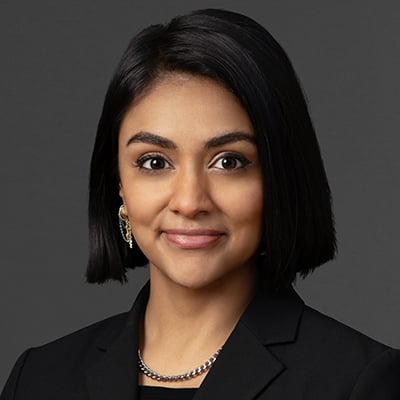
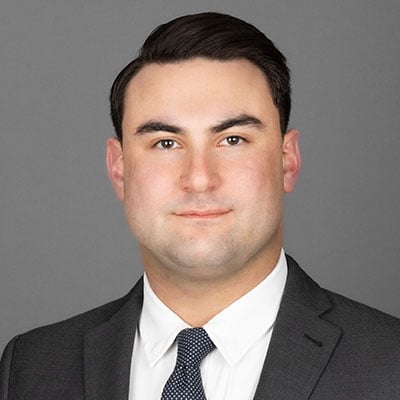
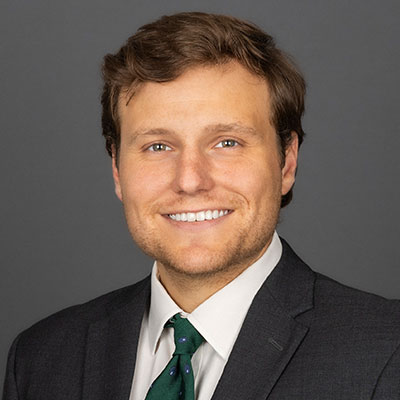
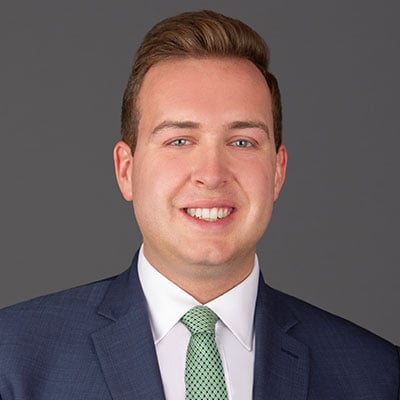
Alli Brown participated in a Q&A with Mike Brown of Nelson Mullins Riley & Scarborough for The American Lawyer Litigation Daily’s “Litigator of the Week” feature, which highlighted their recent win for Kenvue. Jessica Davidson, Geoffrey Wyatt, Nina Rose, Rupal Joshi, Jordan Einstein, Jacob Cogdill, Matthew Nelson, Sam Heyman and Chris Talbot were also recognized.
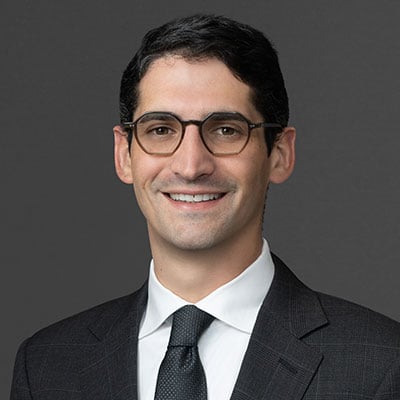
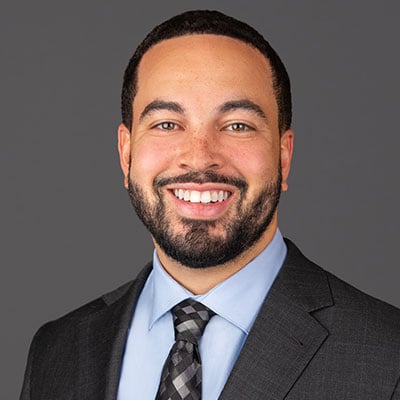
Our litigators of the week are Alli Brown of Kirkland & Ellis and Mike Brown of Nelson Mullins Riley & Scarborough. They represented the company formerly known as Johnson & Johnson Consumer Inc. (now Kenvue) in the first case to go to trial claiming that trace amounts of benzene in Neutrogena brand aerosol sunscreens can cause a rare form of blood cancer.
After a three-week trial, jurors in the Philadelphia Court of Common Pleas deliberated for just 90 minutes before returning a defense verdict this week. Jurors found for the company on the question of whether the sunscreen products used by the two women was defective and did not proceed to questions about causation and damages.
Litigation Daily: Who was your client and what was at stake here?
Mike Brown: Our client is Kenvue, a consumer health company. This was a high stakes wrongful death jury trial in a tough jurisdiction for corporate defendants, with two very sympathetic decedents and claims for significant compensatory and punitive damages.
How did this matter come to you and your firms?
Alli Brown: Johnson & Johnson is one of our oldest and dearest clients. When Kenvue separated from Johnson & Johnson and became an independent company, we were grateful for the opportunity to work for Kenvue, too. This case involved sunscreen products that were sold by Johnson & Johnson Consumer Inc. before Kenvue ever existed.
Who was on your teams and how did you divide the work at this trial?
Mike Brown: Alli and I are blessed to have trial teams that have been with us for a very long time. Even though our day-to-day team was small, we want to recognize the larger group of lawyers and paralegals who all made important contributions at various points along the way. Alli’s team included Jessica Davidson, Geoff Wyatt, Nina Rose, Rupal Joshi, Jordan Einstein, Jacob Cogdill, Matthew Nelson, Sam Heyman, Chris Talbot, Lamia Sampson and Mark Rigney and my team included Donna Sturtz, Taylor Bayat, Chelsea Barnes, Zoe Rydzewski, Bridget Harris, Joel Jordan, Trevor Patschorke, Trish Koester and Ann Galloway. This was the seventh case Alli and I have tried together, so we have a pretty good sense of how to best divide trial work.
Alli Brown: Basically, because Mike is much nicer than me, he always does the crosses of the family members. When we first started trying cases together, Mike would sometimes come up to me during a cross with a Post-It note that said “too mean.” He has the perfect demeanor for some of the really emotionally tough crosses.
Mike, what were your chief concerns going into jury selection for your client in the Philadelphia Court of Common Pleas?
Mike Brown: I’ve seen a lot of juries. Last time I checked the list, I had tried well over 100 cases, including many in the Court of Common Pleas. My biggest concern headed into jury selection was making sure we found out whether folks were truly going to be able to set aside sympathy. That’s a hard thing to find out without a case specific juror questionnaire and with limited individual voir dire, but at the end of the day, I felt we seated a jury that was going to be able to follow the court’s instructions. I was right.
How did you deal with the emotionally difficult facts involving the deaths of two women from an extremely rare form of cancer?
Alli Brown: This case was a reminder of the unfair reality that cancer doesn’t care how old you are or how much you are loved. One of our plaintiffs was in her early 40s with young children and the other in her early 60s with grown children. We felt their profound loss through the testimony of numerous family members at trial. We also felt confident based on the overwhelming scientific evidence that sunscreen did not cause these rare and awful diseases.
Mike and I were very up front with the jury about our sympathy for the families. We told them right from the start that nothing we were going to do in defending this case and proving that sunscreen was not the cause of these cancers was meant in any way to disrespect the families or diminish their grief. What we said was genuine and I think the jury knew that.
The jury stopped at the first question and found the products were not defective. What did you need jurors to understand to reach that answer?
Alli Brown: We had a number of arguments for the jurors to reject the manufacturing defect claim. First, the evidence showed the sunscreens at issue were not manufactured in the chain of contamination until just a few months before these plaintiffs were diagnosed with cancer. While the plaintiffs’ lawyers repeatedly argued the sunscreens had been contaminated for more than a decade, the evidence just didn’t come close to supporting that claim. Instead, the evidence made clear that the contamination—which was industry wide and impacted other sunscreen brands as well as hand sanitizers, deodorants and dry shampoos—was limited in time and place.
In addition, a manufacturing defect under Pennsylvania law requires a product to deviate from its specification. Here, the sunscreens met their specifications, and the trace contamination was completely unexpected. Based on the jury questions we received during the short deliberations, my hunch is that the jurors concluded the actual sunscreen products these plaintiffs purchased were not contaminated and therefore did not contain a manufacturing defect.
You presented the plaintiffs’ own medical records as evidence for your causation defenses. How did you translate highly technical genetic evidence into something jurors could use during deliberations?
Mike Brown: We were helped tremendously by two incredibly credentialed acute myeloid leukemia (AML) cancer doctors who testified for us. These doctors are the real deal, and we relied heavily on their testimony, especially because the plaintiffs didn’t bring a single expert who treats AML patients. Our experts were critical in explaining the genetic fingerprint for cancers associated with benzene exposure. The plaintiffs’ cancers did not have the genetic fingerprint for a benzene associated disease and the plaintiffs’ medical records contained that important evidence.
At what point did you realize that plaintiffs were not going to offer a competing exposure assessment, and how did that shape your trial strategy?
Mike Brown: We knew from plaintiffs’ expert reports that they would not offer an exposure assessment, in fact it was the basis for numerous pretrial motions. The plaintiffs’ experts, however, had done exposure assessments in many, many occupational exposure cases and held themselves out as experts in human risk assessments. The failure of plaintiffs’ experts to conduct an exposure assessment here was devastating to their case. We were able to argue that our expert’s exposure assessment, as well as the company’s health hazard evaluation, was unchallenged. The truth is trace levels of contamination in some bottles of sunscreen did not come close to the levels needed to put someone at risk for disease.
Alli, much of your closing focused on causation, but you said causation was embedded in that first question to the jury. How did you make the case that the causation evidence mattered to the defect question?
Alli Brown: For starters we argued that this wasn’t a manufacturing defect because the products conformed to their specifications and the trace contamination that was ultimately discovered in some bottles of sunscreen was completely unforeseen. But under Pennsylvania law, a manufacturing defect cause of action requires a finding that the defect was a factual cause of the alleged harm, which is why I decided to focus nearly all of my closing on causation issues. I argued sunscreen could not have been the cause for at least four reasons: there was no genetic fingerprint, there was insufficient latency, there was insufficient dose and there is no epidemic of AML following widespread sunscreen use. Ultimately, I think our jurors never had to grapple with causation because they concluded these plaintiffs did not use sunscreens that were even potentially contaminated.
Why do you believe the jury was able to reach its verdict so quickly?
Alli Brown: This case wasn’t a close call on the facts or on the science. Philly gets a bad reputation as a “judicial hellhole” for corporate defendants, but the speed of this verdict is a sobering reminder that Philly juries can and will decide cases on the evidence and not on sympathy or prejudice. Philly is my home and I was proud of the swift way in which 12 members of my community saw through unsupported lawsuit allegations and rejected claims that lacked scientific merit.
What, if anything, does this verdict establish for other litigation involving your client’s recalled aerosol sunscreens?
Mike Brown: The speed with which our jury rejected these claims in a consolidated case in the City of Philadelphia should make clear these are not viable claims. This trial also demonstrated the courage of our client to stand up for the safety of its products.
What will you remember most about this matter?
Alli Brown: Mike and I have tried a number of cases together over the years, but what will stand out most to me about this one is the energy of the Kirkland Philly office during this trial. We used my office as our trial site, and I was in awe every day and night to see our teams working together seamlessly. Despite working around the clock, everyone always seemed to have a smile on their face. We could not have achieved this result without both teams’ unrelenting dedication and effort and the support of an incredible client.
Mike Brown: I will always remember how quickly both firms merged into one team, with one goal of putting forward the best possible case we could. It was seamless. We started working on this trial as colleagues and ended it with many new friends. That teamwork made a great difference for us.